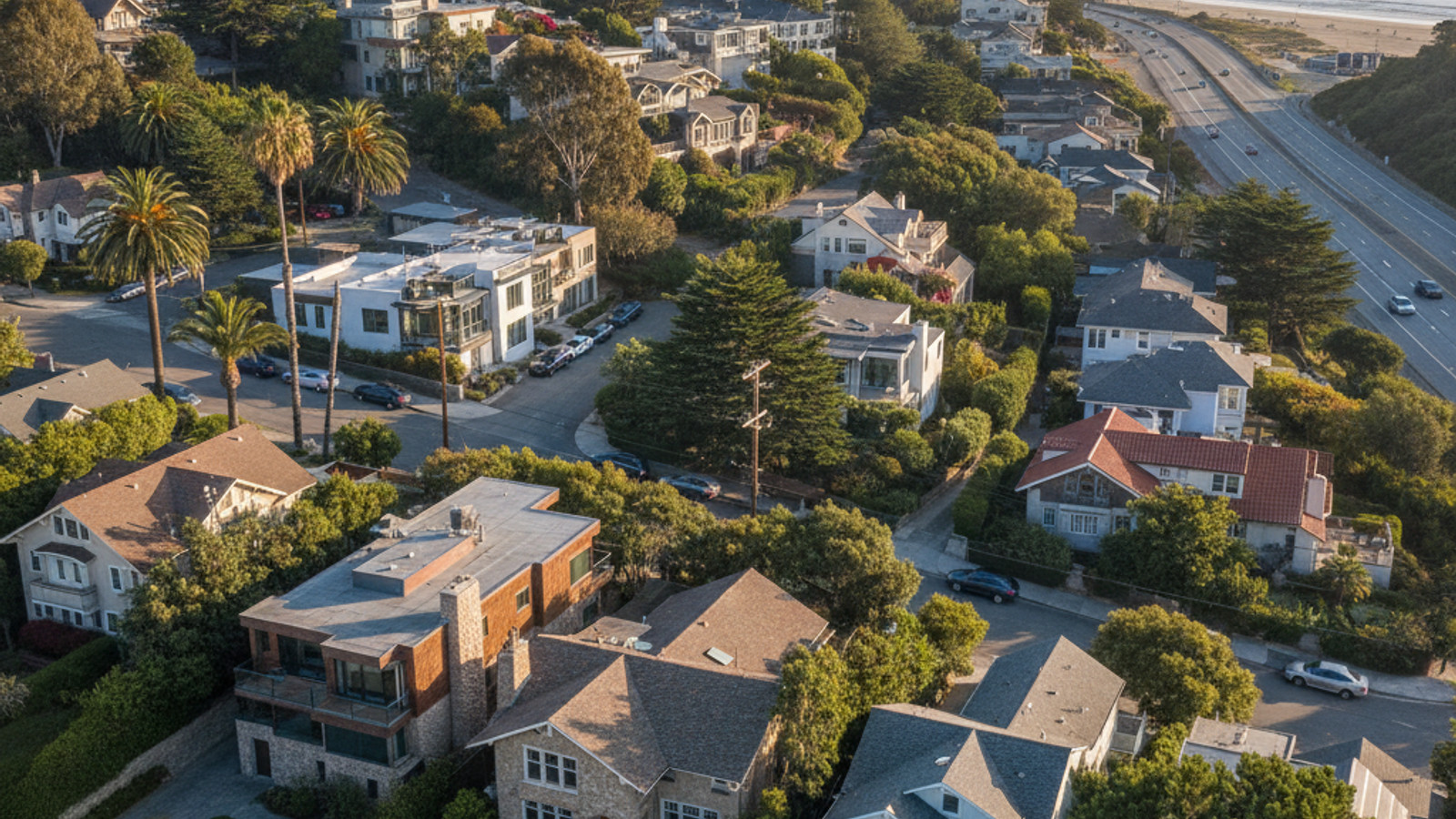
Selling a home in Santa Cruz County requires more than just listing it on the local MLS and waiting for buyers to appear. The unique geography of the California coastline dictates that hyper-local knowledge is the foundation of a successful real estate transaction. Setting the right baseline expectation is crucial for maximizing your final sale price and minimizing unnecessary delays.
Buyers searching for homes for sale in Santa Cruz are heavily influenced by shifting inventory levels and precise location features. Accurately valuing your property means understanding how your specific neighborhood compares to broader regional trends. A misstep in your initial listing figure can lead to stagnant days on market and missed financial opportunities.
The 2026 Santa Cruz Real Estate Market Snapshot
The Santa Cruz real estate market currently demonstrates steady activity, with median home prices hovering roughly between $1,300,000 and $1,490,000 in early 2026. This data provides a crucial baseline for sellers looking to position their properties competitively against active inventory. Understanding macro supply and demand metrics is the critical first step before a sign ever goes in the yard.
Average days on market currently range from 20 to 60 days, depending heavily on the property type and exact street location. Sellers who price accurately out of the gate are seeing a list-to-sale price ratio of approximately 98.8% to 100.9%. This indicates a stabilized environment where properly positioned homes achieve close to, or slightly above, their initial asking price.
My clear takeaway for sellers is that ignoring these current market conditions will almost certainly cost you money. Relying on outdated sales data from previous years is a fast track to mispricing your home. You must align your pricing strategy with the reality of today’s active buyer pool to secure the best possible outcome.
Evaluating Neighborhood Comparables Across Santa Cruz
Establishing an accurate property valuation requires evaluating recent sales within a very tight geographic radius. Comparing a multi-level coastal condominium directly to a sprawling single-family home inland will yield completely skewed results. Buyers weigh specific structural elements like square footage alongside objective location data to determine what a property is actually worth.
Distinct neighborhoods carry distinct property values based on their historical trends and existing housing stock. For instance, the Westside often commands different pricing metrics than Seabright due to lot sizes and proximity to commercial corridors. You must look at comparable properties that share these hyper-local characteristics to find a realistic pricing baseline.
Proximity to objective local features also heavily impacts comparable values across the county. Easy access to UC Santa Cruz, the Santa Cruz Beach Boardwalk, or the Highway 1 and Highway 17 commute routes will inherently adjust the final calculation. A home located right next to a major transit artery requires a fundamentally different pricing approach than one tucked away in the coastal foothills.
Proven Pricing Strategies for Santa Cruz Sellers
Strategic pricing requires significantly more effort than just picking a number that feels right or matching an automated Zillow estimate. Different properties demand tailored strategies depending on specific market conditions and the timeline of the seller. A blanket approach simply does not work in a region with such diverse housing options.
The most effective marketing strategy leverages local knowledge and precise valuation over broad San Francisco Bay Area averages. Relying on regional data often obscures the micro-trends happening on your specific street. Sellers who partner with an experienced real estate agent can pinpoint the exact strategy needed to attract serious buyers.
Once you understand the baseline data, you can choose a specific approach to position your listing. The goal is always to maximize your return while keeping the transaction timeline predictable.
Performing a Comprehensive Competitive Market Analysis (CMA)
A robust Competitive Market Analysis entails far more than glancing at recent neighborhood sales. An expert real estate agent adjusts the valuation for specific micro-climates, designated school districts, and granular street-level data. This detailed review moves the process far beyond the limitations of automated online estimates.
Creating a reliable CMA requires analyzing both active inventory and historically closed transactions. Looking at homes currently on the market shows you your direct competition, while closed sales prove what buyers are actually willing to spend. Balancing these two datasets establishes a highly realistic baseline for your initial asking price.
Pricing Slightly Below Market Value to Generate Multiple Offers
Pricing a home slightly below its precise market value can exponentially increase showings and attract a larger pool of potential buyers. This tactic often generates multiple offers and competitive bidding wars during the critical first few weeks on the market. When buyers perceive an exceptional value, they are highly motivated to submit aggressive offers quickly.
This specific strategy works best for highly desirable properties located in areas with tight inventory. By intentionally underpricing, you force buyers to act immediately rather than taking a wait-and-see approach. The resulting competition frequently drives the final sale price well above the initial listing figure.
Adjusting for Property Condition and Location
You must objectively value your home based on its current physical state and exact placement within the neighborhood. A fully updated turnkey property will naturally command a premium compared to a home requiring major renovation or deferred maintenance. Sellers must be honest about the condition of their property to avoid alienating buyers during the inspection phase.
Objective detriments must be priced into the listing upfront to maintain buyer interest. A property situated adjacent to a noisy commercial zone or lacking dedicated parking requires a price adjustment to offset those permanent features. Conversely, unique coastal proximity or direct mountain access requires a fundamentally different valuation model than a standard suburban lot.
The Dangers of Overpricing Your Home
Testing the market with an inflated price tag is one of the most common and costly mistakes a seller can make. Overpricing almost always leads to extended days on market, which quickly stigmatizes the listing. When a property sits unsold for months, buyers naturally assume there is a hidden physical defect.
Data consistently shows that a property priced just 5% too high can drastically cut the potential buyer pool in half. You completely miss out on the early listing momentum when the most motivated buyers are actively touring new inventory. Chasing unrealistic home prices almost always backfires, resulting in painful price drops and a lower final sale price.
Buyers are highly educated and have immediate access to comparable sales data. If your home is noticeably overpriced compared to similar active listings, they will simply skip the showing entirely. Pricing correctly from day one is the only reliable way to protect your equity and ensure a smooth transaction.
Frequently Asked Questions
How long does it take to sell a home in Santa Cruz CA?
The timeline to sell a property in Santa Cruz currently averages between 20 to 60 days. This timeframe depends heavily on the exact location, property condition, and how accurately the home is priced upon initial listing. Homes positioned competitively tend to secure offers on the faster end of that spectrum.
Should I price my home high and negotiate down?
Pricing high to leave room for negotiation is a flawed strategy that typically increases your days on market. Inflating your asking price cuts your buyer pool significantly and causes your listing to lose early momentum. A precise, data-driven price attracts serious offers immediately and prevents the need for drastic price reductions.
How do objective local features impact my home’s value?
Objective features like proximity to the coastline, access to the Highway 17 commute corridor, or distance to UC Santa Cruz directly dictate property values. Buyers place a premium on homes that offer convenient access to major employment hubs and outdoor amenities. Your real estate agent will adjust your home’s baseline value to reflect these permanent geographical advantages.




Leave a Reply