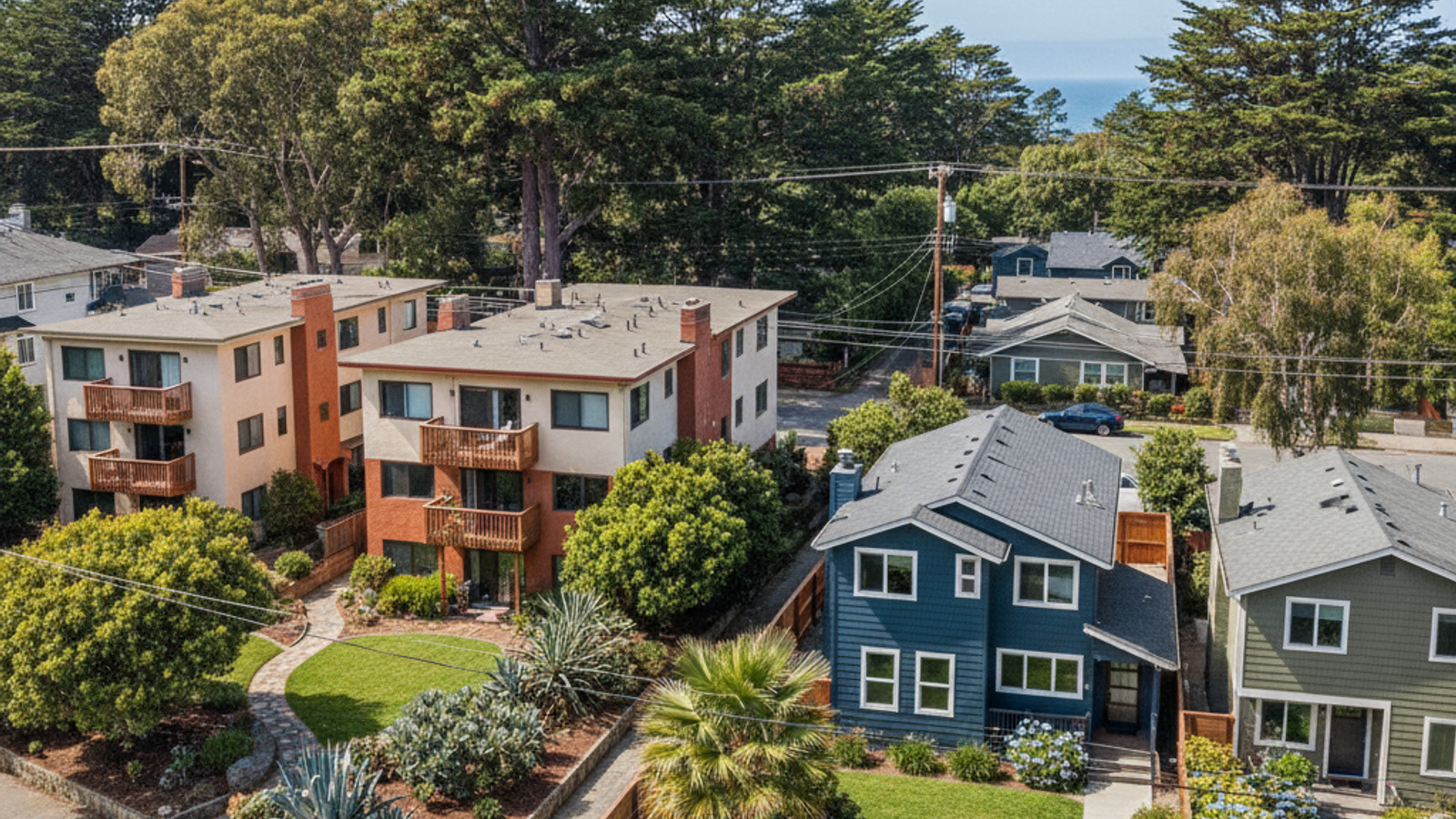
Relocating to the California coast requires a realistic look at the local real estate market, especially when budgeting for monthly housing costs. Prospective tenants evaluating living in Santa Cruz often find that the average rent in Santa Cruz CA reflects the high demand for coastal access.
Understanding current rent prices helps renters negotiate effectively and allows real estate investors to evaluate rental income potential accurately. With the local market characterized by limited inventory and high geographical appeal, securing a lease demands swift action and financial preparation.
Whether you are searching for a compact studio near the university or a spacious standalone house near the beach, pricing varies heavily based on property type and neighborhood. Reviewing these 2026 market dynamics provides a clear advantage for anyone navigating this competitive coastal city.
Average Rent Prices by Unit Size and Property Type
The overall rental market in Santa Cruz County, California, operates at a significant premium compared to most of the country. Currently, the overall median rent in the city hovers around an approximate $3,409 per month, heavily influenced by the mix of available property types.
When you compare this city median against the national average of roughly $1,640, it becomes clear that housing costs here require a substantial portion of a typical household budget. Renters must carefully weigh their space requirements against their financial limits before committing to a lease.
Renters seeking pure value are better off focusing on older apartment buildings rather than newer luxury single-family homes. These established multi-unit buildings often provide more stable rent ranges and more predictable utility costs.
Studio and 1-Bedroom Apartments
Smaller units remain highly sought after by individuals and students who want to minimize their monthly expenses. Studio rent currently ranges from approximately $2,244 to $2,641, depending heavily on the building amenities and exact location.
For those needing a separate living space, statistics for 1-bedroom apartments show costs spanning from $2,414 to $2,685 per month. Because smaller unit inventory is consistently tight, prospective tenants should expect fierce competition and limited lease availability during peak moving seasons.
2-Bedroom, 3-Bedroom, and Single-Family Houses
Larger households face a steep increase in monthly costs when expanding their search to multi-bedroom properties. Average rent prices for 2-bedroom units generally sit between $3,217 and $3,658, while a typical 3-bedroom unit commands anywhere from $3,601 to $4,498.
There is a sharp contrast between standard apartment rent and the premium costs associated with single-family houses for rent. Standalone houses frequently exceed $4,500 and can easily reach $7,000 or more for prime locations.
Because these high-value 3-bedroom properties represent a significant financial risk, landlord policies and tenant screening requirements are exceptionally strict. Applicants must be prepared to show robust proof of income and excellent credit histories to secure these larger homes.
Rent Variations Across Santa Cruz Neighborhoods
Location remains the absolute primary driver of the rent price in Santa Cruz County, California. Even a distance of a few blocks can drastically alter monthly costs, depending on proximity to the coastline, commercial districts, or major transit routes.
Transit accessibility plays a massive role in property values, specifically regarding proximity to Highway 1 and Highway 17. Rentals situated near these critical arteries experience high demand from professionals commuting over the hill to Silicon Valley or down the coast.
Commuters should prioritize neighborhoods near major transit hubs to offset high local rental costs with tangible time savings. Trading a slightly higher monthly rent for a significantly shorter daily drive often proves to be the smartest financial and logistical choice.
Westside and Downtown Rentals
The Downtown area features high walkability and immediate access to prominent commercial centers, making it a highly requested location. Renters looking at a Downtown 1-bedroom apartment should expect to pay roughly $3,589 to $3,745 per month.
Westside rental rates command a similar premium due to the dense concentration of multi-unit real estate and proximity to the UC Santa Cruz campus. A typical 1-bedroom on the Westside ranges from $3,316 to $3,585, with added appeal coming from easy access to Wilder Ranch State Park.
Eastside and Seabright Options
Renters often look to the Eastside neighborhood as a potentially more accessible entry point into the local market. An Eastside 1-bedroom apartment averages around $3,132, offering a slight discount compared to the western half of the city.
The Seabright area presents a different dynamic, where walking distance to the Santa Cruz Beach Boardwalk and local beaches noticeably inflates the median rent. The architectural mix here ranges from older apartment buildings to fully updated standalone homes, providing diverse options for tenants willing to pay the coastal premium.
Santa Cruz Rental Market Trends for 2026
Tracking historical rental market trends over the past 12 months reveals a landscape of minor year-over-year adjustments rather than massive shifts. Depending on the specific property index, overall rent prices have decreased slightly by roughly 0.3% to 5% across the city.
Despite these small dips, current inventory levels remain low, and severe supply constraints continue to maintain high baseline costs. Landlords rarely struggle to fill vacancies, meaning the leverage in lease negotiations still leans heavily toward property owners.
Tenants waiting for a major price drop will likely be disappointed by the realities of this constrained market. Securing a long-term lease now provides much more stability against future eviction or sudden rent hikes than holding out for a steep market correction.
For real estate investors evaluating homes for sale in Santa Cruz, these steady rental rates underscore the long-term value of local property acquisition.
Frequently Asked Questions
What is a livable wage in Santa Cruz, California?
A livable wage in this coastal city must account for the high cost of housing and general living expenses. Because the overall median rent is approximately $3,409, a household typically needs to earn over $120,000 annually to avoid being severely rent-burdened. Standard financial guidelines recommend spending no more than one-third of gross income on housing.
How much should rent be on a $300,000 house?
Real estate investors calculating cap rates often use the one percent rule as a baseline, suggesting monthly rent should be around $3,000 for a $300,000 property. However, finding a standalone house at that purchase price in this specific market is virtually impossible today. Investors must adjust their rental income expectations based on the much higher actual acquisition costs in the county.
Do most people rent or own in Santa Cruz, CA?
The city features a very high proportion of renter-occupied households compared to the national average. Driven by the large student population and the prohibitive cost of purchasing real estate, renters make up a significant majority of the local residents. This ongoing demand ensures the rental market remains robust year after year.



Leave a Reply