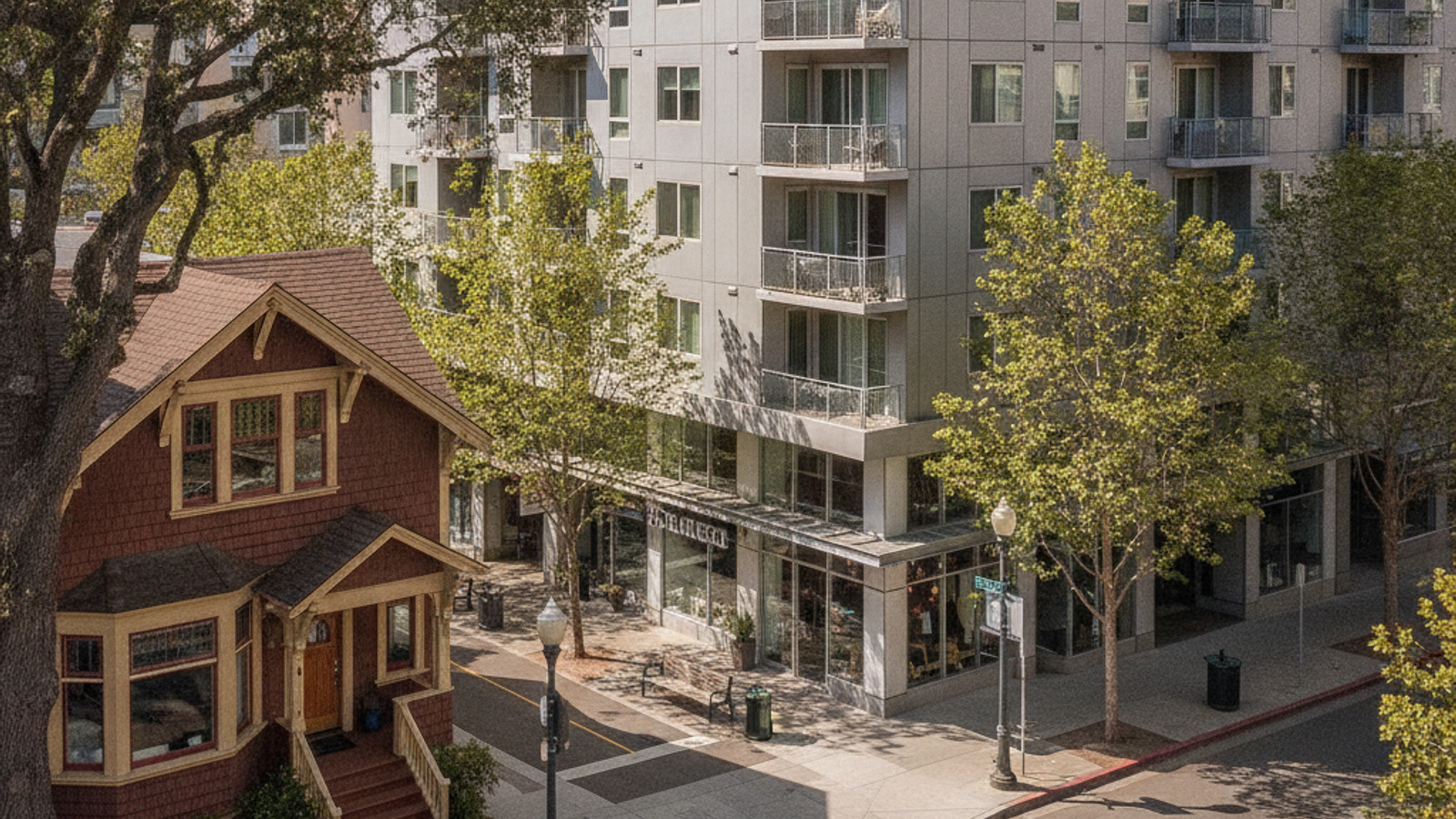
Downtown Santa Cruz is the city’s commercial and residential core – anchored by the historic Santa Cruz Town Clock at the intersection of Mission Street, Front Street, and Pacific Avenue. If you’re looking at homes for sale in one of the best neighborhoods in Santa Cruz, CA, you’ll find a mix of historic properties, mid-century builds, and newer condominium developments.
The broader Santa Cruz, CA housing market had median sale prices reach approximately $1,462,500 by mid-2026, with homes selling in just 15 days. Downtown operates at a different pace and offers a different property mix than the coastal edges – but what it gives you in return is walkable access to everyday dining, healthcare facilities, and local schools.
What to Expect in the Downtown Neighborhood
The Santa Cruz Town Clock, designated a historic landmark in 1979, anchors the northern edge of the district near the US Post Office. That intersection of Mission Street, Front Street, and Pacific Avenue is essentially the organizing principle of the whole area – the streets fanning south from it form a grid of commercial storefronts and residential blocks.
Living here means you’re at the center of the city’s transit and commercial activity. You share the neighborhood with retail shops, professional offices, and city government buildings. That’s the trade-off downtown always asks for. What you get in return is direct connections to other major parts of the city – the beaches to the south, the forested residential zones to the north.
The Layout and Housing Setting
A few blocks off Pacific Avenue, the character shifts noticeably. The main thoroughfares run mixed-use – multi-story buildings with residential units sitting above ground-floor retail. Step onto the side streets and you’re in established residential blocks: single-family houses, older apartment buildings, a quieter feel.
Lot sizes are smaller here than in the outlying neighborhoods. That’s just the reality of dense urban infill, and it’s worth keeping in mind as you evaluate properties. On the upside, the downtown urban canopy and coastal climate keep things moderate year-round – cool, foggy mornings and mild afternoons.
Real Estate Prices and Property Types
The broader Santa Cruz market sits around a $1,462,500 median sale price with a brisk 15-day median time on market. Downtown tells a somewhat different story. Data from late 2025 showed the median sale price for homes in the Downtown Santa Cruz neighborhood at $1,279,000, with homes in the immediate downtown area averaging 52 days on the market at that time.
Right now the wider city carries about 2.5 months of supply and roughly 61 active listings. You’ll encounter a mix of attached housing and detached single-family residences downtown – early 20th-century bungalows alongside modern condo units on the same block.
Condos, Townhomes, and Single-Family Options
Condos make up a large share of downtown inventory. Most come with homeowner associations handling exterior maintenance and common area upkeep, so you’ll want to read the HOA documents carefully – monthly dues and building-specific rules vary more than you’d expect.
Single-family homes in the district tend to be older, established properties on compact lots, many with historic architectural details. New construction for detached homes is essentially nonexistent in the downtown core, so if you want something newer, you’re looking at condo and townhome developments.
Dining, Transit, and Local Amenities
This is genuinely one of downtown’s strongest selling points, and the restaurant lineup reflects just how walkable the area is. Chocolate the Restaurant has been operating for over 25 years. Oswald Restaurant covers California comfort food, Laili Restaurant handles Afghani-Mediterranean, and Gabriella Cafe rounds out the longer-established options. Newer additions include Bad Animal, Chicken Foot, The Midway, and Hook & Line. Sugo Italian Pasta Bar and Evarista’s Comal Restaurant add more variety for everyday meals. Pacific Avenue and its cross streets concentrate most of this within a short walk of anywhere in the neighborhood.
Getting Around the District
Pacific Avenue is the main pedestrian corridor – shops, restaurants, flat terrain. Walking and cycling cover most daily errands without much effort. The Santa Cruz Town Clock area functions as the central node for local traffic and transit routing.
Mission Street and Front Street give you quick vehicle access out of the core, connecting to regional highways for anyone commuting elsewhere in Santa Cruz County. One practical note: test your specific commute during peak hours before you commit to a property. Downtown traffic patterns have their own rhythm.
Local Schools, Healthcare, and Climate
Downtown is served by Santa Cruz City Schools, which runs both elementary and high school districts under a common Board of Education. The district covers students in the City of Santa Cruz and surrounding county areas including Davenport and Soquel. Santa Cruz High School – established in 1897 – sits right in the downtown footprint, which makes for a walkable campus for students living nearby.
That said, you’ll want to check the district’s attendance zone maps to confirm which specific elementary and middle schools serve any address you’re seriously considering. Zone boundaries don’t always follow the logic you’d expect.
Medical Facilities and Everyday Services
The primary hospital serving the area is Dominican Hospital (Dignity Health), a full-service acute care center at 1555 Soquel Drive. It provides emergency services and holds a Stroke Care Excellence Award. For outpatient needs, the Sutter Maternity & Surgery Center of Santa Cruz operates at 2900 Chanticleer Avenue, recognized for outpatient care excellence. Both facilities are a short drive from the downtown core.
Finding a Home in the Area
The broader Santa Cruz market recorded 24 homes sold in a recent 30-day period. Downtown’s lower inventory and specific property mix mean well-priced listings move – and competing offers are a real possibility, not a remote one. A local agent helps you figure out which specific blocks fit your budget and what you’re actually looking for.
Renting first is a reasonable move if you want to test the walkability and day-to-day feel before committing. Whether you’re buying or renting, checking new listings daily makes sense in a market with supply this tight.
Next Steps for Buyers
Get your mortgage pre-approval in order first – you need to know your actual purchasing power before any of the rest of this matters. Then think honestly about property type: a condo offers convenience and lower maintenance, a detached home offers privacy, and downtown has limited supply of the latter.
It’s also worth comparing downtown to other Santa Cruz neighborhoods before you decide. The density and commercial activity here create a specific kind of living experience that’s genuinely different from the quieter residential districts on the city’s edges – and that difference cuts both ways depending on what you want out of daily life.
Frequently Asked Questions
How much do condos and single-family homes typically cost in downtown Santa Cruz, CA?
The median sale price for homes in the Downtown Santa Cruz neighborhood was $1,279,000 as of late 2025. In the broader Santa Cruz market, median prices sit around $1,462,500 as of mid-2026. Prices vary widely depending on whether you are buying a newer condo or an older single-family home.
Can I buy an investment property in downtown Santa Cruz and use it as a short-term Airbnb rental?
It depends on current municipal zoning and licensing regulations. Buyers should consult the City of Santa Cruz planning department for the latest rules on short-term rental permits. Restrictions often apply to non-owner-occupied properties in residential zones.
Are homes in downtown Santa Cruz located in a flood zone or liquefaction hazard area?
Some areas near the San Lorenzo River and coastal zones may fall into specific hazard areas. Buyers should review natural hazard disclosure reports during the escrow process. Your real estate agent can help pull specific hazard maps for any property you consider.
Is dedicated parking usually included when buying a condo or townhome in the downtown Santa Cruz area?
Many condo and townhome developments include deeded or assigned parking, but it’s not guaranteed for every building. Older buildings or historic properties may rely on street parking or city permit lots. Verify parking arrangements in the HOA documents or property listing before you assume anything.
How does buying real estate in downtown Santa Cruz compare to the Westside or Seabright neighborhoods?
Downtown offers denser, mixed-use living with immediate walking access to commercial dining like Gabriella Cafe and Laili Restaurant. The Westside and Seabright areas typically feature more detached single-family homes and direct beach access. Buyers choose downtown when they prioritize walkability to urban amenities and transit over larger residential lots.
How fast are homes currently selling in the downtown Santa Cruz market?
Across the broader Santa Cruz market, homes are selling in about 15 days as of mid-2026. Data from late 2025 showed homes in the specific downtown neighborhood averaging 52 days on the market. Well-priced properties in good condition often sell faster than the neighborhood average.

Leave a Reply