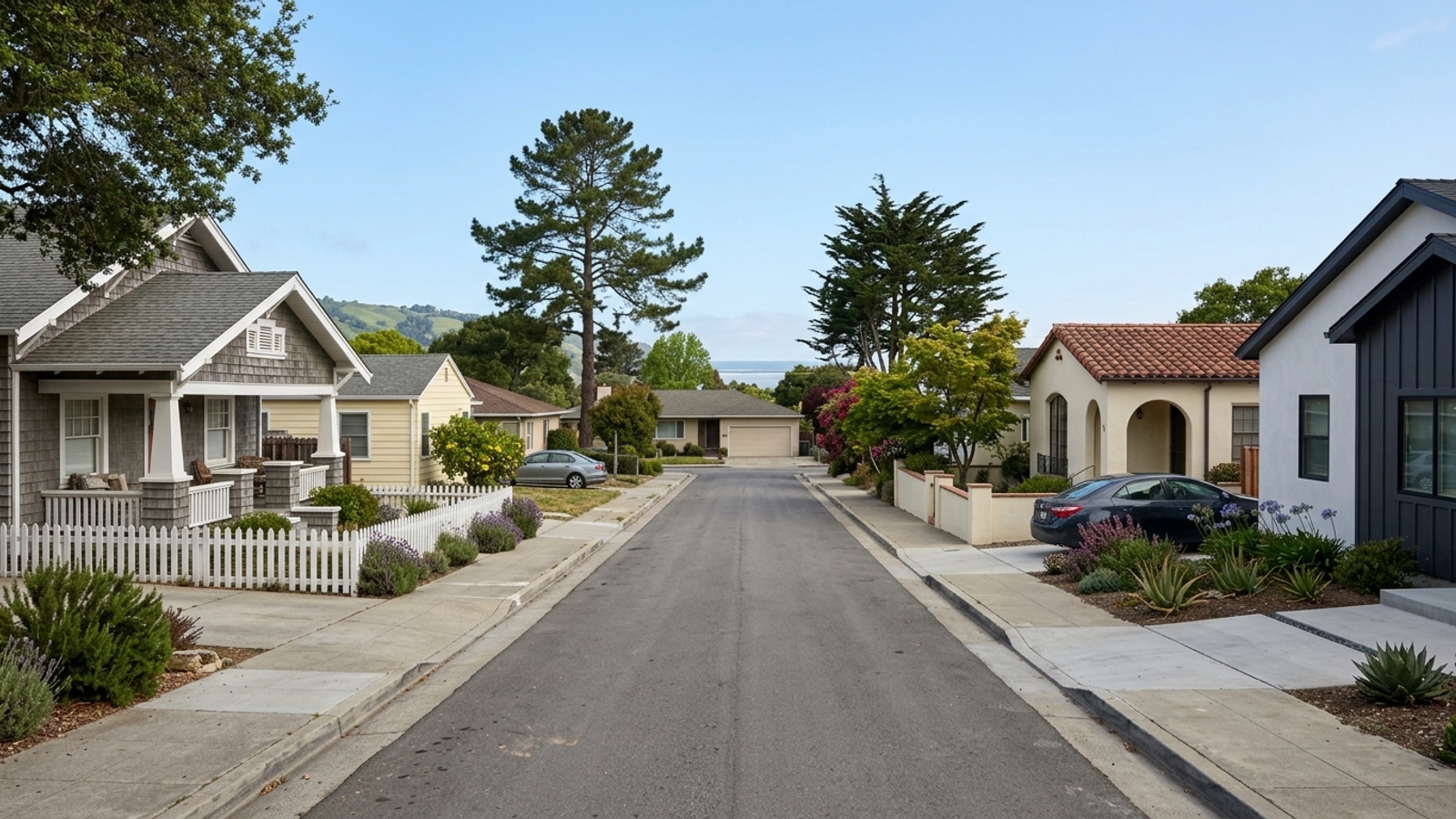
The median sale price for a home in Santa Cruz, CA is currently around $1.35 million. If you’re entering the Santa Cruz housing market in late 2026, you’re dealing with low inventory and mortgage rates that keep moving around – not an easy combination.
What makes this market unusual is the speed. Despite borrowing costs that would make most people hesitate, homes here are going under contract in about two weeks. That tells you something about underlying demand that a price chart alone won’t.
Current Trends in the Santa Cruz Housing Market
As of late summer 2026, 93 homes recently sold in the city. That’s a tight but genuinely active Santa Cruz market – not a ghost town, not a frenzy, but somewhere in between where you can’t afford to be slow.
Half of all homes that go under contract do so in roughly 14 days. That’s the number I’d watch above all others if you’re a buyer right now.
Median Home Prices Today
Recent data puts the median sale price at $1,351,106. That’s your baseline for a single-family home in Santa Cruz.
What’s notable is where deals are closing. Properties are averaging 101.6% of asking price at closing, and about 35% of recent sales went above list. So the sticker price isn’t where the conversation ends – it’s where it starts.
Inventory and Supply Levels
The city has 63 active listings right now, which works out to about 2.1 months of supply. A balanced market sits at four to six months, so you can see how far from equilibrium we are.
That gap between supply and demand is what keeps buyers competing. New developments like RiverRow in downtown Santa Cruz added 175 apartment units, which helps with housing availability overall – but it doesn’t move the needle on for-sale single-family inventory, which is what most buyers here are after.
Are Home Values Dropping in Santa Cruz?
The median sale price is down about 8.4% compared to the same time last year. That’s a real number, not a rounding error, and it’s worth understanding what’s behind it.
Here’s the honest read: this isn’t a market in freefall. Homes are still selling fast and still closing above asking. The dip reflects buyers hitting a ceiling on what they can absorb at current borrowing costs – not sellers suddenly having to beg.
Recent Price Trends
The 8.4% year-over-year decline puts the current median at roughly $1.35 million. For context, earlier in 2026 some metrics were showing slight increases, so the trajectory hasn’t been a straight line down.
If you’re selling, price off recent comparable sales – not what your neighbor got last year. If you’re buying, homes that sit longer than that 14-day median are often where you’ll find a little more room to negotiate.
What Drives Local Home Values
Santa Cruz has real economic anchors. UC Santa Cruz, Dominican Hospital, and Fresenius Medical Care generate consistent demand from workers who need to live close to where they work.
The tech and manufacturing side of the regional economy is worth knowing about too. Joby Aviation moved to full-scale manufacturing and launched commercial operations in Dubai in 2026. Zero Motorcycles in Scotts Valley continues to anchor that part of the job market. These aren’t fly-by-night operations, and that matters for long-term demand.
Who Has the Advantage: Buyers or Sellers?
With 2.1 months of supply, this is a seller’s market. That’s not spin – the math is straightforward.
That said, the 8.4% year-over-year price dip is a reminder that sellers aren’t completely insulated. Buyers have a limit, and if a property in Santa Cruz is priced wrong, even a tight market won’t save it.
What the Current Market Means for Buyers
Get your financing sorted before you start touring homes. With a median days on market of 14 days, there’s no time to scramble for pre-approval once you’ve found something you like.
Bidding wars are still happening – homes are averaging 101.6% of list price at closing. Budget for the possibility of escalation clauses, and assume that anything turnkey is going to require you to come in above asking.
How Sellers Should Prepare
Pull recent sales in your specific neighborhood and price from those, not from what the market was doing a year ago. A home that’s overpriced will sit, and sitting means you’ve already missed the window where 35% of sales close above list.
Presentation matters at this price point. Buyers spending over $1.3 million expect a well-maintained property. The homes driving those above-list closings aren’t the ones that need work – they’re move-in ready.
How Mortgage Rates Impact Local Sales
As of late September 2026, the national average for a 30-year fixed mortgage sits between 7.46% and 7.627%. On a $1.35 million home, that’s a payment that gets your attention quickly.
These rates are also a big reason inventory stays as low as it is. Homeowners who locked in rates from previous years have very little financial incentive to sell and then turn around and buy at 7.5%. So they stay put, which keeps those 63 active listings from growing much. It’s a cycle that reinforces itself.
Some buyers are pausing their search. Others are asking sellers for concessions to offset the carrying costs. Both responses are rational, and both are worth factoring into your strategy whether you’re buying or selling.
Frequently Asked Questions
Are home prices dropping in Santa Cruz, CA?
Yes, there’s been a dip. The median sale price is down 8.4% year-over-year, sitting at roughly $1.35 million. That said, homes are still selling quickly and still often closing above asking price.
Is it a buyer’s or seller’s market in Santa Cruz?
It’s a seller’s market. The city currently has about 2.1 months of supply, well below the four to six months needed for a balanced market. Sellers benefit from high demand and low inventory.
Will mortgage rates affect Santa Cruz home prices?
Yes – rates affect both purchasing power and inventory. With 30-year fixed rates running between 7.46% and 7.627% in late 2026, some buyers are priced out, which contributes to the recent 8.4% dip in median sale prices.
What is the Santa Cruz real estate market forecast for 2026?
The market is expected to stay tight through the end of 2026. With around 63 active listings, competition will likely remain high even as buyers adjust to elevated interest rates.
Should I wait for interest rates to drop before buying a house in Santa Cruz?
It depends on your timeline and budget. Waiting for rates to fall could improve your purchasing power – but lower rates tend to bring more buyers into the market, which drives up competition and prices.
Which Santa Cruz neighborhoods are expected to hold their property values best in the coming years?
It comes down to localized demand and proximity to major employers like UC Santa Cruz and Dominican Hospital. Areas with new investment – like downtown near the RiverRow and Anton Pacific developments – tend to see sustained buyer interest.
With low inventory, should I consider building a house in Santa Cruz?
With only a couple of months of supply available, finding the right property can be challenging. Some buyers bypass the bidding wars entirely by pursuing a new custom home build instead of competing for existing single-family inventory. This approach requires patience but avoids the immediate pressure of the current fourteen-day market cycle.
Does it make more sense to rent or buy in Santa Cruz right now?
High borrowing costs and median sale prices over a million dollars have prompted some residents to lease instead. Comparing your potential mortgage payment against the typical monthly rent can help clarify your financial strategy. Recent apartment additions like the RiverRow development have also helped improve overall housing availability for tenants.

Leave a Reply