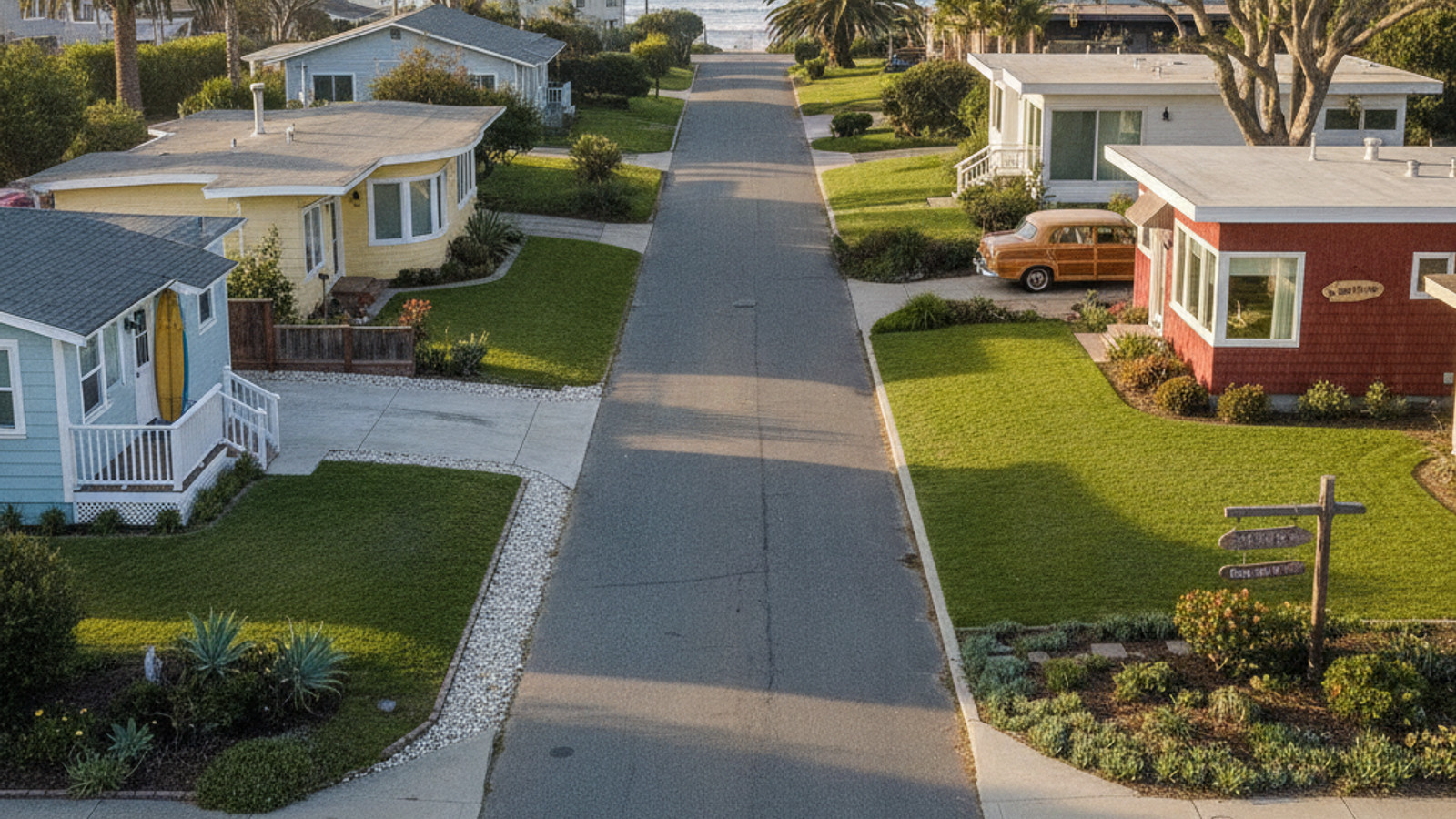
Santa Cruz, CA gives buyers a real choice – not between “good” and “better,” but between two genuinely different coastal personalities. The Westside and Pleasure Point both put you on the Pacific, both sit near world-class surf breaks, and both have their own commercial corridors. What they don’t share is much else. Comparing them is a great starting point for anyone searching for the best neighborhoods in Santa Cruz, CA.
The broader Santa Cruz market is moving fast in 2026. Median sale price is around $1,462,500, homes are spending roughly 15 days on the market, inventory sits at just over 60 active listings, and sellers are closing at an average of 101.3% of list price. That last number tells you something: if you find the right house, you’re probably not the only one who noticed. Knowing exactly which neighborhood fits your life before you start touring saves a lot of time.
Getting to Know the Westside and Pleasure Point
The San Lorenzo River is the dividing line. Everything west of it is the Westside; Pleasure Point is further east, and the two areas have grown into distinct places over the decades – different architecture, different street grids, different daily rhythms.
Westside Overview
The Westside runs from downtown Santa Cruz out toward the rugged coastline, anchored by the two-mile West Cliff Drive path that leads directly to Natural Bridges State Park. It’s a neighborhood with serious open space: Wilder Ranch State Park and the Pogonip preserve are both here. Mission Street is the main artery, connecting the neighborhood to Highway 1 when you need to get somewhere outside Santa Cruz.
Pleasure Point Overview
Pleasure Point sits in an unincorporated pocket of Santa Cruz County, technically outside city limits. It centers on East Cliff Drive, a waterfront promenade that’s part of the Monterey Bay Sanctuary Scenic Trail. Portola Drive is the commercial spine – it’s where you’ll find local businesses and community events like the annual Pleasure Point Street Fair. The Corcoran Lagoon wetlands border the neighborhood to the east.
Local Housing Markets and Property Types
Values in both neighborhoods regularly clear the citywide median. You should expect competition: multiple offers and above-ask closings are common, not exceptions.
Westside Real Estate Options
Coastal single-family homes dominate the Westside’s housing stock. Closer to the shoreline you’ll find some apartments and condominiums, but the neighborhood skews toward houses. Pricing swings considerably depending on how close you are to the water and whether you have ocean views. A 2026 local guide puts median list prices in the $1.5 million to $2.3 million range for homes near the water. Older neighborhood analyses show figures closer to $942,000 for properties further inland – so location within the Westside matters more than buyers sometimes expect.
Pleasure Point Real Estate Options
Pleasure Point’s inventory is mostly small to medium-sized single-family homes and mobile homes, a lot of them built between 1940 and 1969 – beach cottages and bungalows that haven’t been replicated anywhere else in the county. A 2026 local guide puts the median home price around $1.9 million, or roughly $1,250 per square foot. Other neighborhood sources cite median sale prices closer to $1.16 million for smaller properties. The range is wide, and what you get for the money depends heavily on size and condition.
Daily Life, Parks, and Commuting
The houses are only part of the picture. Where you walk, surf, eat, and get on the highway shapes whether a neighborhood actually works for your life.
Living on the Westside
Steamer Lane defines the Westside’s surf identity – it hosts the O’Neill Coldwater Classic and draws crowds even on weekdays. The Santa Cruz Surf Museum sits at Lighthouse Point. Derby Park and the Seymour Marine Discovery Center round out the recreational options. For food and socializing, the Swift Street Courtyard pulls most of the weight, with craft breweries and restaurants in a compact setting. Getting out of the neighborhood means Mission Street to Highway 1, which is straightforward enough.
Living in Pleasure Point
Pleasure Point has its own named surf peaks – Sewer Peak, First Peak, Second Peak, and 38th Ave/Jack’s – and the blufftop area at Pleasure Point Park looks directly down on the break known as The Hook. The food scene along Portola Drive is low-key and local: Point Market and Pleasure Point Pizza are the anchors. The coastal walking trails aren’t a short drive away; they’re outside your front door.
Choosing Between the Two Neighborhoods
Both neighborhoods will cost you. The citywide median is $1.46 million, and these two areas run above it – so the question isn’t price, it’s fit.
If you want larger single-family homes with real proximity to state parks and open land, the Westside is worth your attention. West Cliff Drive and the Swift Street Courtyard give the neighborhood a structured, walkable quality that’s hard to replicate.
If you’d rather have a mid-century beach cottage with a smaller neighborhood footprint and surf peaks you can see from the street, Pleasure Point makes more sense. The East Cliff Drive promenade and that immediate connection to the water are things you either want every day or you don’t.
Frequently Asked Questions
How do real estate prices on the Westside of Santa Cruz compare to Pleasure Point?
They’re in the same range, though proximity to the water moves the numbers considerably in both neighborhoods. Westside median list prices run from $1.5 million to $2.3 million near the ocean, with some inland properties showing figures closer to $942,000. Pleasure Point’s estimated median is around $1.9 million – roughly $1,250 per square foot – though smaller properties there can sell closer to $1.16 million.
Which neighborhood offers better walking paths: Westside or Pleasure Point?
Both have solid waterfront access on foot. The Westside has the two-mile West Cliff Drive path leading to Natural Bridges State Park. Pleasure Point’s East Cliff Drive promenade is part of the Monterey Bay Sanctuary Scenic Trail. What you prefer depends on whether you want a longer, park-connected route or a tighter coastal loop that puts you right above the surf breaks.

Leave a Reply