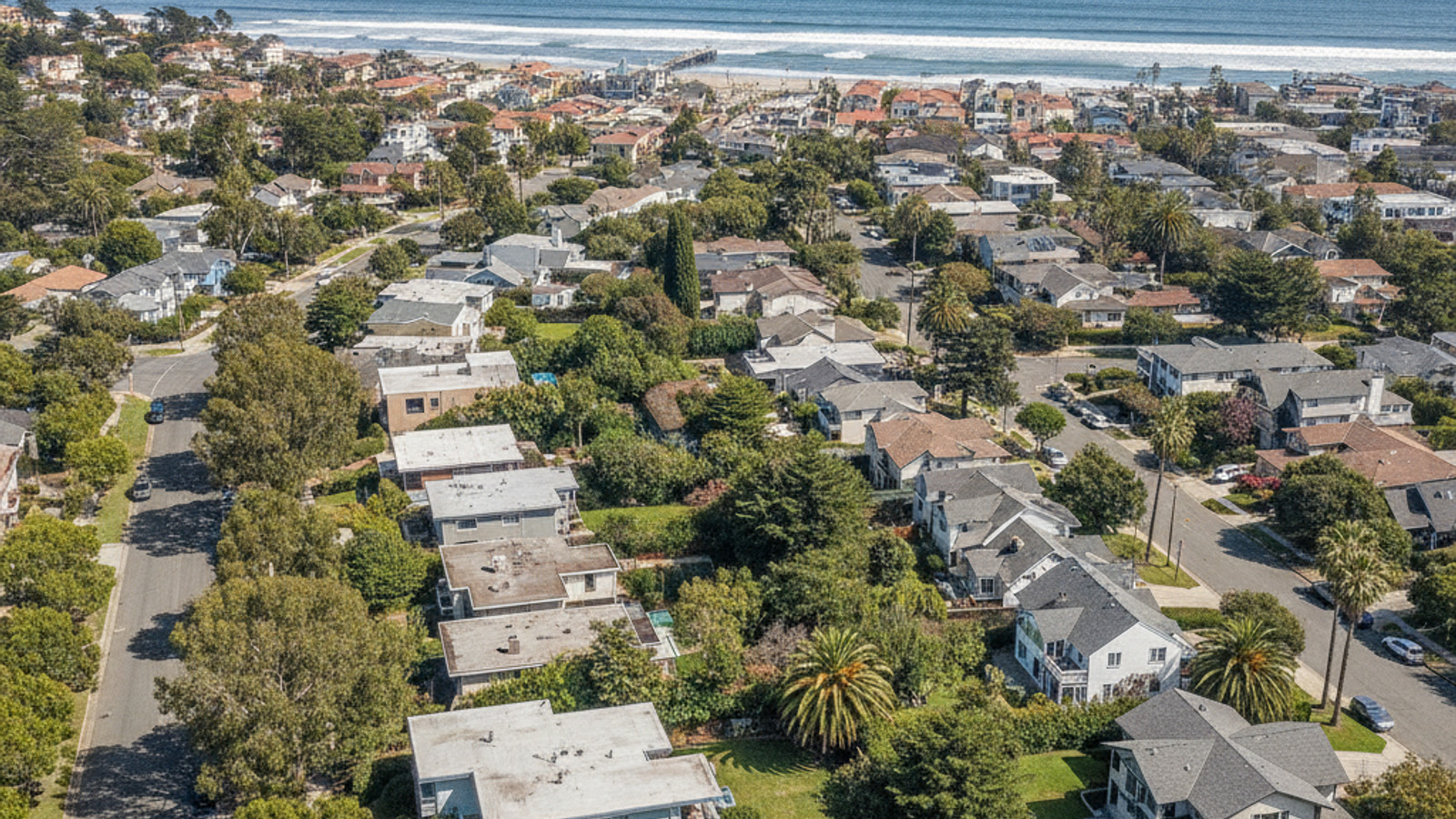
Capitola sits directly on the northern edge of Monterey Bay, just east of the city of Santa Cruz. It’s its own municipality, not just one of the best neighborhoods in Santa Cruz, CA that borrowed a catchy name, and that distinction matters when you’re buying here. The historic beachfront village gives the place a specific identity – the colorful Venetian Court, the 1883 Hihn Building – that you won’t find replicated anywhere else along this stretch of coast.
If you’re looking at the Capitola Santa Cruz real estate market, you’re looking at a median home price that hovers around $1.2 to $1.3 million. That number means different things depending on whether you want a beach bungalow within walking distance of the water or a more conventional house a few blocks inland. Getting clear on that distinction early will save you time.
An Overview of Capitola in Santa Cruz, CA
Capitola is part of Santa Cruz County, but it runs its own show – its own planning department, its own codes, its own personality. The layout follows a fairly logical pattern: a central village area anchored to the water, with residential streets fanning out inland from there. Closer to the beach, you’re looking at denser, older construction. Further out, the lots open up and the layouts get more suburban.
The Venetian Court is the recognizable piece of the village, but the Hihn Building at 201 Monterey Ave deserves more attention than it usually gets. Built around 1883 and listed on the National Register of Historic Places as California Historical Landmark No. 860, it’s a marker of how long this place has been a real community rather than just a seasonal destination.
Where Capitola Fits in the Area
Capitola’s bordered by the Live Oak area to the west and Aptos to the east. For day-to-day life it functions as a self-contained community, but for employment and larger retail it stays connected to the broader Santa Cruz region.
Highway 1 is your primary corridor – north toward San Francisco, south toward Monterey. You’re not isolated out here, but you’re also not sitting on a freeway interchange. That balance is part of what buyers are paying for.
The Local Housing Landscape
The residential streets run a wide range: mid-century houses, newer builds, multi-unit properties. Closer to the water, lots are smaller – the land is too valuable to leave underutilized. Inland, you get more conventional suburban setups with wider streets and attached garages.
Which setting works for you depends on what your days actually look like. If you’re walking to coffee and the beach most mornings, the tighter footprint near the village makes sense. If you need a home office, a garage, and room for a dog to run, you’ll be looking further inland.
Real Estate and Home Prices in Capitola
Homes in the broader Santa Cruz area are spending roughly 15 days on the market as of mid-2026. That’s not a slow market. If you’re not ready to move quickly – financing lined up, priorities sorted – you’ll watch properties go before you’ve finished thinking about them.
The available inventory across the wider Santa Cruz region sits at roughly 61 homes. Single-family houses, townhomes, and condominiums are all in the mix. Many properties carry coastal architectural influences, though what that actually means for a specific home depends entirely on its construction era and what renovations have been done since.
Buyers looking at properties with homeowners associations should build HOA fees into their budget from the start, not as an afterthought.
Housing Stock and Property Types
Most of what you’ll buy here is established construction. Newer builds are rare – there simply isn’t much land left to build on. That means you’re evaluating older beach bungalows and mid-century houses alongside the occasional modern custom build.
Condominium complexes are scattered throughout the area and often appeal to buyers who don’t want exterior maintenance responsibilities. Before you close on one, though, review the association’s financials. A condo with a poorly funded reserve account is a liability, not a convenience.
Comparing Costs to the Broader Santa Cruz Market
The numbers vary by source, so here’s what’s actually being reported. Homes.com puts Capitola’s median home price at $1,298,000. Zillow shows an average home value of $1,218,842. Movoto recorded a median list price of $994,000 earlier in 2026. The range is real – it reflects different methodologies and different moments in time, not error.
For context, the broader Santa Cruz region median sale price runs approximately $1,462,500. So depending on property type and how close to the water you’re looking, Capitola can represent a different entry point than the county figure suggests. It’s not a dramatic discount, but it’s worth knowing.
Daily Life: Dining, Transit, and Local Services
You won’t need to leave Capitola for most everyday errands. Grocery stores, pharmacies, hardware stores – they’re here. The Capitola Mall area handles larger retail needs for both the town and the communities around it.
Santa Cruz METRO bus routes connect Capitola to neighboring towns for residents who’d rather not drive the coastal corridors every day.
Everyday Dining and Local Restaurants
The dining options range from casual to formal without much pretense about either. Well-known spots include Shadowbrook Restaurant, Trestles Restaurant, Pete’s Fish House, Margaritaville, Caruso’s Tuscan Cuisine, East End Gastropub, Zelda’s on the Beach, Gayle’s Bakery & Rosticceria, and Pizza My Heart. That’s a legitimate lineup for a town this size.
These places serve residents year-round, not just during tourist season – which matters if you’re buying here to actually live here.
Getting Around the Area
The specific Santa Cruz METRO routes serving Capitola are worth knowing before you commit to a car-light lifestyle. Route 2 covers Capitola, Cabrillo, and Main. Routes 3A and 3B service the Capitola Mall and Live Oak areas. Route 55 runs to Cabrillo, Rio Del Mar, and La Selva. Route 73 connects Soquel, Freedom, and Cabrillo.
Collectively, these routes link you directly to Santa Cruz, Watsonville, and other parts of the county. Whether that’s enough depends on where you’re commuting and how often.
Healthcare and Weather in Capitola
Two things buyers from inland markets sometimes underestimate about Capitola: how mild the climate actually stays year-round, and how close the medical facilities are. Both matter for full-time residents.
Nearby Medical Centers and Hospitals
The primary hospitals serving Capitola are Dominican Hospital and the Sutter Maternity & Surgery Center of Santa Cruz, both offering emergency services and specialized care. Watsonville Community Hospital is another option nearby. For certain specialized needs, the Community Hospital of the Monterey Peninsula serves the broader region.
You’re not isolated from medical care here. None of these facilities are in Capitola itself, but none require a long drive either.
Coastal Climate and Seasonal Weather
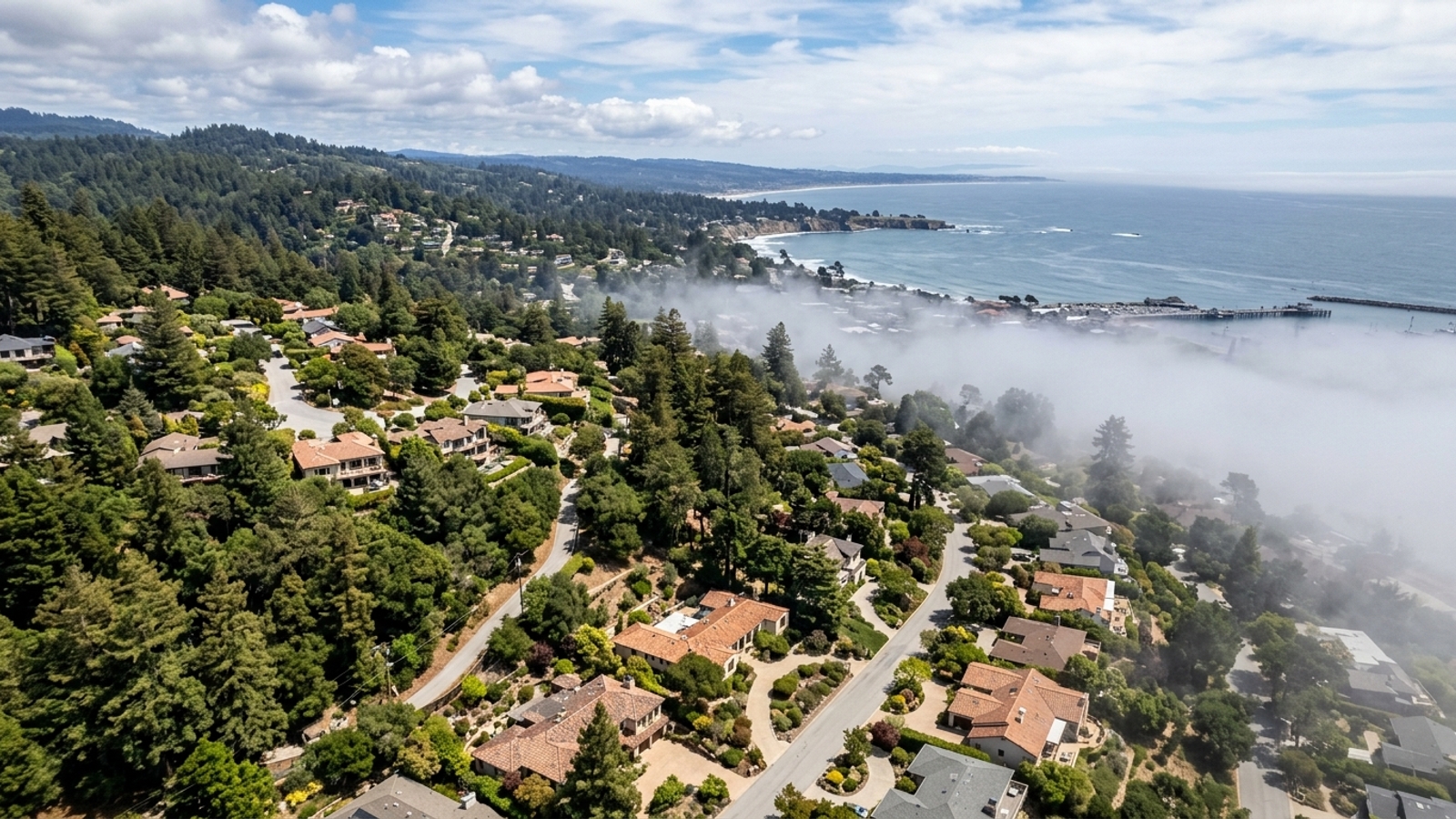
Winters are mild and wet. Summers are dry and temperate – cooler than you’d expect if you’re used to inland California, because Monterey Bay does real work moderating the temperature. Summer mornings typically come with fog that burns off by afternoon.
The rain arrives in winter. That’s worth factoring into property maintenance planning, especially for older homes closer to the water.
Investment Properties and Short-Term Rentals
The coastal location draws buyers interested in secondary homes and income-producing properties. Both single-family houses and multi-unit buildings are in play, and properties closer to the beachfront village tend to attract stronger rental interest.
What you can actually do with a property once you own it is governed by municipal code, and those codes are not static. The city regulates both short-term lodging and long-term leasing arrangements.
Evaluating Income Properties
Monthly carrying costs – property taxes, insurance, potential HOA fees – need to be modeled before you fall in love with a cap rate estimate. The broader Santa Cruz market shows roughly 37.5% of homes selling above list price as of mid-2026. That tells you something about what you’ll likely pay to get into a property in the first place.
Local ordinances update frequently enough that you should pull current municipal zoning maps for any specific parcel before closing, not rely on what was true six months ago. Licensing is a required step for short-term rental operations – that’s not optional.
Buying or Renting a Home in Capitola
The regional supply sits at just 2.5 months of inventory. That’s a tight market by any measure. Homes priced near the $1.2 million mark regularly draw multiple offers, so if you’re not financing-ready when the right property appears, you’ll likely lose it to someone who is.
Monitor new listings daily. That’s not alarmism – it’s just how this market works right now.
Renting first is a legitimate strategy if you’re still figuring out which part of Capitola actually suits your daily routine. Capitola Santa Cruz homes for rent exist, and spending time in a neighborhood before buying into it is never a bad idea.
Working with a Local Agent
A local agent tracks neighborhood-specific pricing in ways that county-level data simply doesn’t capture. They know what’s driving a particular street’s comps, which associations are well-run, and how to structure an offer that doesn’t immediately get set aside.
They’ll also walk you through property boundaries, utility connections, and HOA details before you’re committed – not after. In a market moving at 15 days median, that clarity matters.
Frequently Asked Questions
Can I buy a house in Capitola and legally use it as a short-term vacation rental?
It depends on the specific property’s zoning and current municipal regulations. Because local ordinances frequently update, buyers should verify short-term lodging permissions directly with the city planning department before purchasing an investment property.
Do homes in Capitola Village require special flood insurance during the winter storm season?
It depends on the exact elevation and flood zone designation of the parcel. While Capitola experiences wet winter weather, buyers should review the specific FEMA flood maps for any property near the waterfront to determine insurance requirements.
How much of a price premium do buyers pay for a home in Capitola compared to neighboring Santa Cruz neighborhoods?
It depends on the specific property type, but Capitola can sometimes offer a lower entry point. The median home price in Capitola sits around $1.2 to $1.3 million, whereas the broader Santa Cruz area median sale price is approximately $1,462,500.
What are the main differences between buying real estate in Capitola versus the adjacent Pleasure Point area?
It depends on the housing stock and local amenities you prioritize. Capitola features distinct landmarks like the Venetian Court and the 1883 Hihn Building, along with specific METRO transit routes that differentiate its daily environment from neighboring Santa Cruz neighborhoods.
Does the Capitola housing market slow down significantly for sellers during the winter tourist off-season?
No – the broader regional market stays active year-round. As of mid-2026, homes in the Santa Cruz area spend a median of just 15 days on the market, which points to persistent buyer demand regardless of the season.
How do residential parking permits and restrictions work for homeowners living near Capitola Beach?
It depends on the exact street and proximity to the central village. Buyers looking at properties near the beachfront should consult the city’s current parking enforcement maps to understand resident permit requirements and guest parking rules.

Leave a Reply