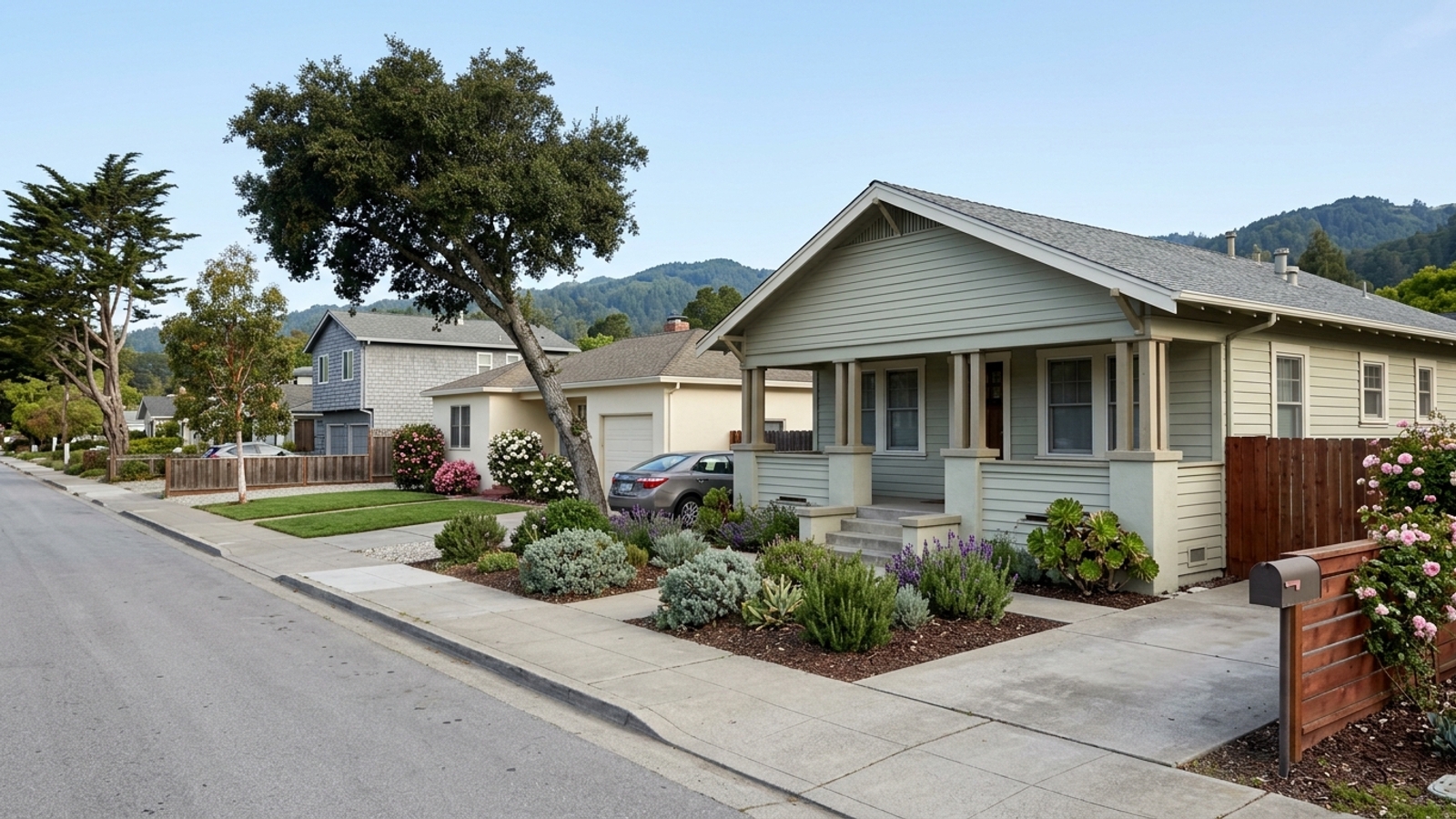
The median sale price for a home in Santa Cruz, CA recently hit about $1,351,100 – and inventory isn’t doing buyers any favors. At any given moment, there are roughly 60 active homes for sale across the city. Homes average just 14 days on the market before going under contract.
That’s a hard market to break into. But both California and Santa Cruz County run programs specifically designed to help first-time buyers cover down payments and reduce monthly costs. Knowing which ones apply to your situation is the difference between sitting on the sidelines indefinitely and getting to the closing table.
Local and State Assistance Programs for Santa Cruz Buyers
Santa Cruz County buyers have access to a mix of statewide California Housing Finance Agency (CalHFA) loan products and more targeted county-level initiatives. The City of Santa Cruz doesn’t run its own direct cash down payment assistance program – most direct help flows through county agencies or nonprofit partners instead.
Statewide options include standard FHA, VA, and USDA loans, often paired with CalHFA assistance to reduce upfront costs. On the local side, the Measure J and Measure O programs offer below-market homes to income-eligible buyers. Buyers looking in unincorporated parts of the county can also explore the CalHome Mortgage Assistance Program.
State-Level California Housing Finance Agency Options
CalHFA bundles a competitive first mortgage with down payment assistance in a single loan product. These programs are available statewide and are widely used by buyers in ZIP codes like 95060 and 95062.
You don’t apply directly to the state. You work with an approved private lender who underwrites the loan according to CalHFA guidelines and handles the paperwork from there.
County and City Programs in Santa Cruz
The County of Santa Cruz CalHome Mortgage Assistance Program serves buyers purchasing in unincorporated areas. Habitat for Humanity Monterey Bay also runs a Mortgage Assistance Program that operates countywide.
Measure J and Measure O work differently – they restrict the resale price on specific homes to keep them affordable for the next buyer. The trade-off is that you agree to equity caps when you eventually sell.
Down Payment Assistance and Grants Available to Local Buyers
The CalHome Mortgage Assistance Program provides a down payment loan of up to $56,400 for eligible buyers in unincorporated areas of Santa Cruz County. You’re required to contribute a minimum 3% cash down payment from your own funds, though a portion of that required cash can go toward closing costs rather than the principal.
Habitat Monterey Bay goes larger, offering up to $100,000 in assistance through its Mortgage Assistance Program for first-time buyers countywide. At the state level, CalHFA’s MyHome Assistance Program offers up to 3.5% of the purchase price for buyers using an FHA loan, or up to 3% toward down payment or closing costs for those using conventional, VA, or USDA loans.
How to Secure These Funds
None of these programs cut you a check. The funds are disbursed at the closing table and applied directly to your loan balance or fees.
You’ll need a loan officer who is specifically certified to originate these products. They submit the paperwork to the county or state on your behalf during the standard escrow period – it’s handled as part of the normal closing process, not as a separate application you manage yourself.
Who Qualifies for These Programs
CalHFA caps income at $262,000 for its standard government and conventional loan limits in Santa Cruz County. Other state programs – like the Dream For All Shared Appreciation Loan – use tighter limits tied to the Area Median Income. For a one-person household in Santa Cruz County, the low-income threshold sits at $111,100.
State and federal programs define a first-time home buyer as someone who hasn’t owned and occupied a primary residence in the past three years. Rented for the last four years after previously owning? You meet the standard definition. You’ll also need to plan on living in the home as your primary residence – these funds aren’t available for investment purchases.
Common Reasons for Disqualification
A high debt-to-income ratio can sink an application even when your credit score clears the minimum. Most assistance programs require at least a 660 score, though 680 is standard for many CalHFA products.
Buying an investment property or a second home disqualifies you outright. These programs exist specifically for owner-occupants securing primary housing – full stop.
Calculating Your Affordability in Santa Cruz
Recent data puts the average sale-to-list ratio in Santa Cruz at over 101%, and about 35% of available homes close above asking. Budget with that in mind from the start, not after you’ve already fallen in love with something.
Many buyers use the 3-3-3 rule as a rough framework: price your home at no more than three times your gross annual income, put down 20%, and keep monthly payments under 30% of gross pay. The 20% down target is rarely realistic for first-time buyers here, but the income multiplier is a useful ceiling to set early.
Income Needed for Entry-Level Prices
A $400,000 purchase price is uncommon for a detached home in Santa Cruz – it comes up occasionally with smaller condos or below-market Measure J units. To comfortably carry a $400,000 mortgage at current rates, buyers generally need an annual household income somewhere between $110,000 and $130,000.
With the local median sale price above $1.3 million, most buyers without significant existing equity are working with dual incomes. Talk to a local lender who can run exact monthly payment scenarios based on current interest rates and Santa Cruz County property taxes – the numbers shift enough that a real calculation matters.
Down Payment Requirements and Local Buying Power
FHA loans require a minimum 3.5% down. Conventional loans can go as low as 3% for qualified first-time buyers. USDA and VA loans offer zero-down options, though USDA properties have to be in designated rural areas outside the main city limits.
At 3% down on a $600,000 entry-level condo in Santa Cruz County, you’re looking at $18,000 in cash. A $10,000 down payment gets you to a maximum purchase price of roughly $330,000 on a conventional loan – and open-market inventory in that range is practically nonexistent here. Buyers at that level usually end up pursuing county-subsidized units or stacking multiple assistance programs together.
Closing Costs and Cash Reserves
Your down payment isn’t the only cash you need at closing. Plan on another 2% to 3% of the total purchase price in closing costs.
Some local assistance programs let you apply grant funds directly to those costs, which helps. You’ll still need cash reserves in your bank account – lenders want to see that you can handle unexpected expenses after move-in, not just get through the closing.
Tax Credits and Lender Selection for California Buyers
First-time buyers can sometimes use a Mortgage Credit Certificate (MCC) to convert a portion of their mortgage interest into a direct federal tax credit. That reduction in your tax liability frees up more monthly income to put toward the mortgage itself.
To use an MCC or any state-backed assistance, you need to go through an approved lender. CalHFA maintains a public registry of loan officers authorized to process their specific grants and loans – your starting point before you talk to anyone.
Working With Local Professionals
Interview more than one lender. Rate differences matter, but so does program familiarity. A loan officer who regularly closes CalHFA and Santa Cruz County assistance loans will move through the extra paperwork far faster than someone at an out-of-state call center who’s never seen a CalHome file.
Local lenders also know which condo complexes in Santa Cruz, CA meet FHA or conventional approval guidelines. That knowledge alone can save you weeks during your property search.
How to Apply for Assistance and Financing
The process starts with a standard mortgage pre-approval – not a grant application. Your lender will pull your credit, review your income, and figure out which state or county programs fit your profile. The grant eligibility determination flows out of that pre-approval, not the other way around.
You’ll need two years of tax returns, recent pay stubs, and two months of bank statements. If you’re applying for a program with income caps, the lender will calculate your household income to confirm you fall under the $262,000 CalHFA limit or the applicable low-income threshold.
Completing the Required Education
Nearly every first-time buyer grant requires you to complete a home buyer education course. It’s mandatory – the certificate of completion has to be in your final loan file.
CalHFA requires an approved course, and most buyers can knock it out online over a weekend. Get it done early in the escrow period. It’s the kind of thing that causes last-minute delays when buyers wait too long, and that’s an avoidable problem.
Frequently Asked Questions
Does California have a first-time home buyer program and how do you qualify?
Yes, California offers several programs through CalHFA, including the MyHome Assistance Program. To qualify, you must not have owned a primary residence in the past three years, you must meet the minimum credit score of 660 or 680, and your income must fall below county-specific limits. You apply through an approved private lender rather than the state directly.
What disqualifies you as a first-time home buyer?
Owning and occupying a primary residence within the last three years immediately disqualifies you. You’ll also be disqualified if your income exceeds the Santa Cruz County cap of $262,000 for standard CalHFA loans, or if you’re purchasing the home as an investment property. A high debt-to-income ratio can prevent approval as well.
What is the first-time home buyer grant in Santa Cruz, CA and how much is it?
There’s no single grant – there are multiple assistance options. The CalHome Mortgage Assistance Program offers up to $56,400 for buyers in unincorporated areas, while Habitat Monterey Bay provides up to $100,000 countywide. Statewide, CalHFA offers up to 3.5% of the purchase price toward down payment or closing costs.
How much down payment do first-time buyers need in California?
It depends on the loan type. FHA loans require a minimum of 3.5% down, while certain conventional loans allow as little as 3%. VA and USDA loans offer zero-down options for eligible buyers.
What salary do you need to afford a starter home in Santa Cruz, CA?
It depends on your down payment and the specific property price. To comfortably afford a $400,000 entry-level condo or subsidized unit, you generally need an annual household income between $110,000 and $130,000. Because the open-market median home price exceeds $1.3 million, standard single-family homes require a much higher household income.
What are the exact steps to apply for a first-time home buyer loan in Santa Cruz, CA?
Start by gathering your financial documents – recent pay stubs, tax returns, and bank statements. Then apply for pre-approval with a CalHFA-approved lender who will verify your eligibility for state and county funds. Finally, complete the mandatory home buyer education course before closing.
How long does it take to get approved for first-time buyer assistance in Santa Cruz, CA?
Initial pre-approval from a lender typically takes just a few days once you submit your paperwork. Final approval for specific grant funds happens during the escrow period, which generally runs 30 to 45 days. Complete your required education course early – it’s a straightforward requirement that causes unnecessary delays when buyers put it off.
Are there city-specific down payment assistance options?
The City of Santa Cruz does not run its own direct cash down payment program, so most help flows through county agencies or nonprofit partners. Buyers can instead utilize homebuyer programs in Santa Cruz like the CalHome Mortgage Assistance Program or Habitat Monterey Bay’s assistance fund. These options provide up to $56,400 or $100,000 respectively for eligible local purchasers.

Leave a Reply