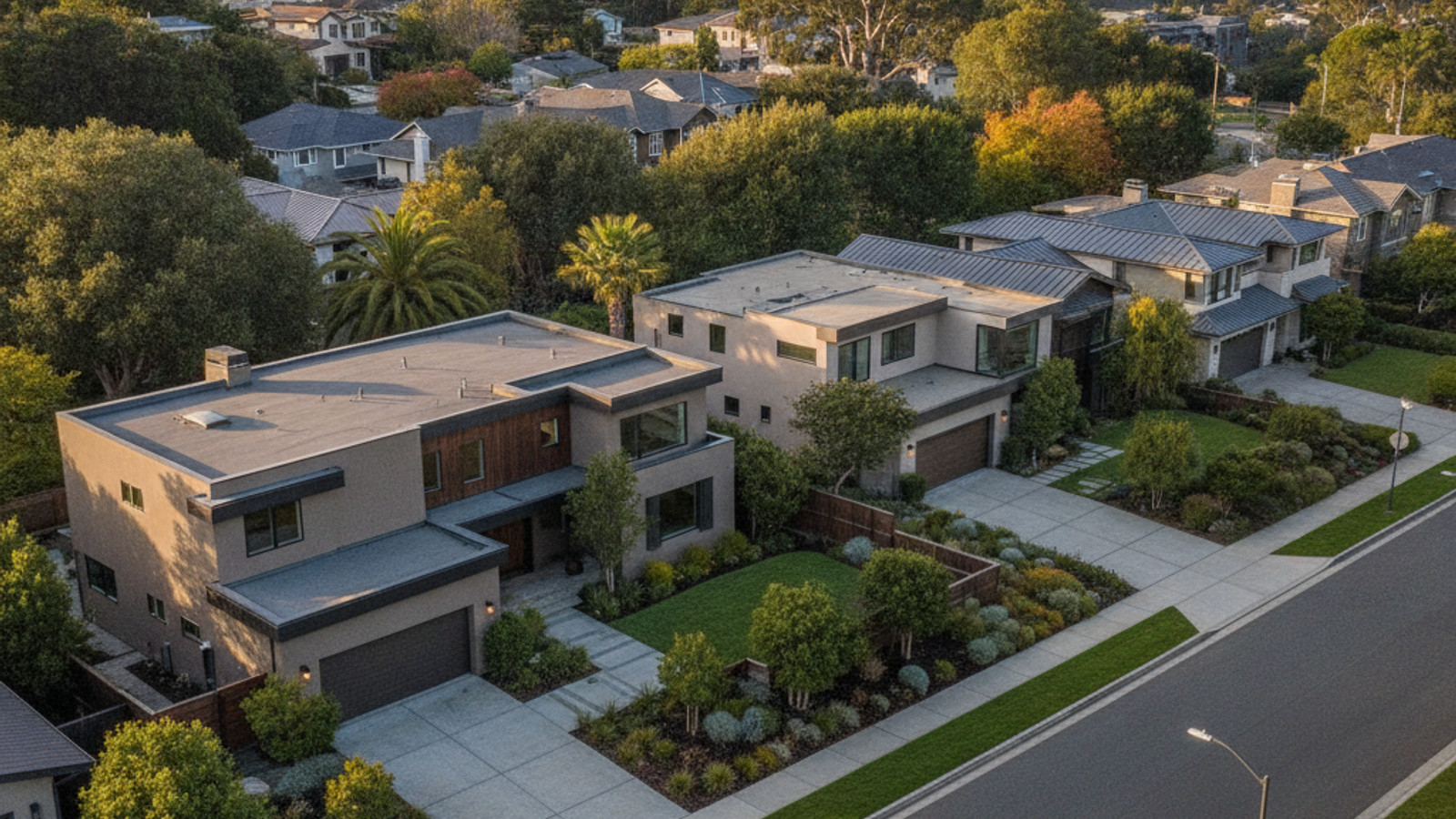
The median sale price for a home in Santa Cruz, CA right now sits at roughly $1,462,500. That’s not a typo, and for first-time home buyers in Santa Cruz, it means the fees required to close your transaction add up to a genuinely significant amount of cash – separate from your down payment, separate from your moving truck.
Most buyers spend months obsessing over the down payment and then get a mild shock when they see how much extra cash escrow needs. That’s what this guide is for.
What Buyers Need to Know About Settlement Fees
Settlement fees are the administrative, legal, and financial costs of actually transferring ownership from one person to another. They have nothing to do with the purchase price itself or the equity you’re putting in.
Both sides of a transaction carry their own set of costs. As a buyer, your fees are mostly tied to securing the mortgage and establishing your interest in the title. The seller is dealing with commissions and paying off their existing debt – their numbers look different from yours.
Closing Costs Versus the Down Payment
Your down payment is equity. Closing fees are the cost of the transaction itself – the loan, the paperwork, the government’s cut.
You wire both amounts together to the escrow company just before the final signing. Your lender will verify you have enough cash to cover both before they issue final loan approval, so don’t assume you can move money around at the last minute.
How Buyer and Seller Costs Differ
Sellers almost always face a bigger total deduction because they’re paying real estate agent commissions. Buyer fees are almost entirely mortgage-related, plus property taxes and local recording costs.
If you’re a cash buyer, your settlement costs drop considerably. No origination fees, no appraisal requirement – the total shrinks fast.
Estimating Average Buyer Closing Costs in California
Buyer closing costs in California typically fall somewhere between 2% and 5% of the purchase price, though some industry sources put the range slightly wider at 1.5% to 5%, depending on loan structure and property type.
On a median-priced $1,462,500 Santa Cruz home, even the 2% baseline gets you to $29,250 in settlement fees before you’ve opened a box. These numbers scale directly with the home’s value because charges like transfer taxes and title insurance are calculated as a percentage of the sale price.
Is the 3% Rule Accurate?
Three percent is a reasonable mental benchmark for a typical financed purchase in California. It’s not precise, but it gets you in the right zip code.
Your actual percentage will run a little lower on high-value properties and a little higher on less expensive ones. Flat fees – the appraisal, the notary charge – represent a bigger slice of a smaller loan.
Why Santa Cruz and Bay Area Fees Run Higher
The math is straightforward: high prices mean the standard percentages translate to larger raw dollar amounts. Santa Cruz isn’t doing anything unusual; it’s just expensive.
Local taxes compound the issue. The City of Santa Cruz levies its own transfer tax on top of the county baseline, so if the property sits within city limits, your total at signing goes up.
Example Closing Costs by Home Price
The local median is over $1.4 million, but plenty of buyers in this market are looking at condos, manufactured homes, or properties further inland at lower price points. The 2% to 5% range applies across the board.
Your lender is required to provide a Loan Estimate within three days of your mortgage application. That document gives you an exact breakdown – use it, don’t just rely on percentages.
Sample Breakdown by Price Tier
On a $300,000 property, settlement fees generally run between $6,000 and $15,000. A $400,000 home brings that range to $8,000 to $20,000.
A $500,000 purchase typically lands between $10,000 and $25,000. At $600,000, expect $12,000 to $30,000 in additional cash to close.
Calculating Your Own Costs
Multiply your target purchase price by 0.02 and 0.05. That gives you the floor and ceiling.
Cash buyers should work with a figure closer to 1% of the purchase price. Without origination fees, appraisal charges, or a lender’s title policy, the total is genuinely much lower.
Itemized Breakdown of Buyer Fees in Santa Cruz
Your final cash-to-close is the sum of a lot of individual line items. They fall into three main buckets: lender charges, third-party services, and government taxes.
Your escrow officer compiles everything into a Closing Disclosure – you’ll receive that form three business days before you sign. Read it.
Loan and Origination Fees
Origination fees cover the cost of processing and underwriting your mortgage. Lenders typically charge between 0.5% and 1% of the loan amount.
You’ll also pay for an appraisal, usually in the $500 to $800 range. The lender requires it to confirm the home’s value supports the sale price.
Title Insurance Customs in Santa Cruz County
Title insurance protects against past ownership disputes and undisclosed liens. There are two policies: an owner’s policy that protects you, and a lender’s policy that protects the bank.
Local custom in Santa Cruz County is that the owner’s title insurance premium is split 50/50 between buyer and seller. The lender’s title policy is customarily paid 100% by the buyer.
Escrow Fees and Transfer Taxes
The escrow company charges a fee for acting as the neutral party managing the funds and paperwork. This is typically split between buyer and seller, though everything is negotiable.
Santa Cruz County charges a real property transfer tax of $0.55 per $500 of value – that’s $1.10 per $1,000, or 0.11% of the sale price. If the property is within City of Santa Cruz limits, there’s an additional city transfer tax of $0.275 per $500 ($0.55 per $1,000) on top of that.
Prepaid Property Taxes and Escrow Reserves
Your lender will require you to prepay several months of property taxes and homeowners insurance into an escrow reserve account. This ensures those bills get paid when they’re due.
You’ll also owe upfront interest for the days between your closing date and your first official mortgage payment. Closing later in the month reduces this specific line item.
Who Pays for What at the Closing Table
Contract language and regional custom both shape who covers which fee. Standard practices exist, but everything in the purchase agreement is negotiable.
One wrinkle worth knowing: some statewide reference lists categorize Santa Cruz among counties where the seller pays the entire title insurance premium. The actual local norm is a split – so prepare to share that cost unless you negotiate something different.
Customary Buyer Expenses
You’re on the hook for everything tied to your financing. That means the appraisal, credit report fees, origination charges, and the lender’s title policy.
You’ll also fund your own property tax and insurance reserve accounts. No seller is going to set up your future tax escrows for you.
Customary Seller Expenses
Sellers cover the real estate commissions for both sides of the transaction, pay off their existing mortgage, and cover any outstanding local property taxes through the day of sale.
Sellers typically handle a portion of the transfer taxes as well. In many California counties, the seller pays the county transfer tax while city taxes may be split.
Ways to Reduce Your Out-of-Pocket Expenses
Santa Cruz homes are currently selling in about 15 days, and 37.5% of them are closing above asking price. You don’t have a lot of leverage right now – but you’re not completely without options.
There are two main levers: what you negotiate with the seller and what you negotiate with your lender. Your Loan Estimate is the place to start on the lender side – go through it line by line and ask about anything that looks like it could move.
Asking for Seller Concessions
A seller concession is a credit at closing that offsets some of your settlement fees. It’s a real thing, and it’s worth asking about.
That said, in a market where homes go under contract in 15 days and more than a third close over list, sellers on competitive listings aren’t eager to hear concession requests. If you need one, be ready to offer a higher purchase price to make the math work for them.
Lender Credits and Shopping Around
Some lenders will credit a portion of your closing costs in exchange for a slightly higher interest rate. That reduces your cash due today and raises your monthly payment – whether that trade makes sense depends on how long you plan to hold the loan.
Always compare Loan Estimates from multiple lenders. Third-party fees like transfer taxes are fixed, but origination and underwriting charges vary meaningfully from one lender to the next.
Frequently Asked Questions
What percentage of the purchase price are average buyer closing costs in Santa Cruz?
Buyer closing costs in California typically range from 2% to 5% of the purchase price. Some industry estimates put the range slightly wider – between 1.5% and 5% – depending on loan type and local taxes.
Who customarily pays the local transfer taxes in Santa Cruz County, the buyer or the seller?
Sellers usually cover the Santa Cruz County transfer tax of $1.10 per $1,000 of the sale price. For properties inside city limits, the additional City of Santa Cruz transfer tax of $0.55 per $1,000 is often split between buyer and seller – though like most things in a purchase contract, it’s negotiable.
Is it realistic to ask the seller to cover my closing costs in the current Santa Cruz market?
It depends on the property. With Santa Cruz homes averaging just 15 days on the market and over a third selling above list price, sellers hold the advantage on desirable listings and are less likely to agree to concessions.
How are Santa Cruz property taxes prorated and included in my final buyer closing costs?
The escrow company calculates property taxes based on the exact closing date – the seller pays for the days they owned the home, you pay for the days after. Your prorated share is due upfront at the closing table.
Do closing costs differ if I buy a condo in Santa Cruz versus a single-family home?
Yes. Buying a condo typically adds fees you won’t see on a single-family purchase: an upfront HOA fee for document processing, transfer charges, and sometimes prepaid HOA dues.
When exactly do I need to wire the final funds for my closing costs to the local title company?
Wire your funds one or two business days before your scheduled closing date. The escrow company has to confirm the funds have cleared before they can record the transaction with Santa Cruz County – don’t cut it close.
Leave a Reply