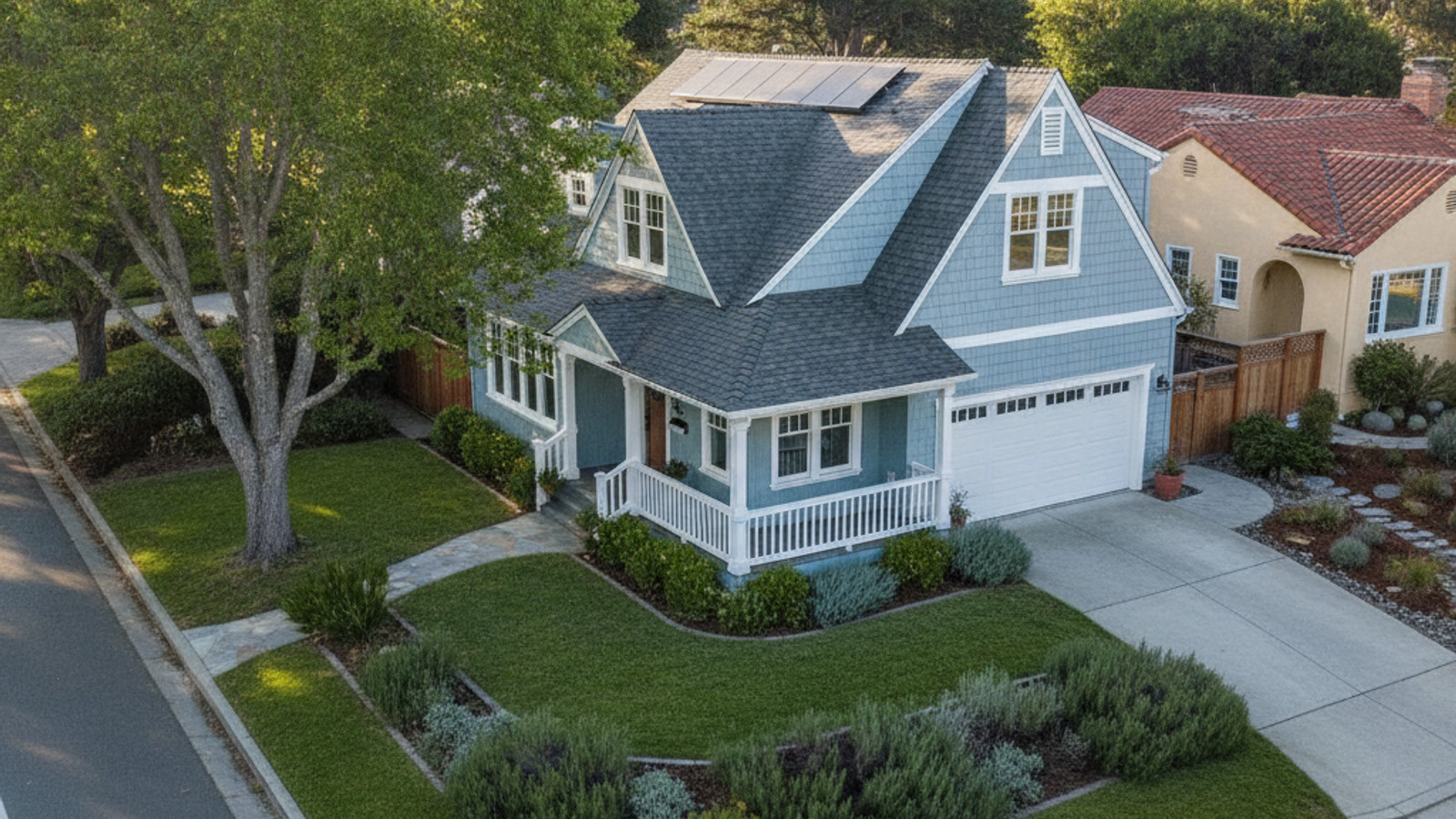
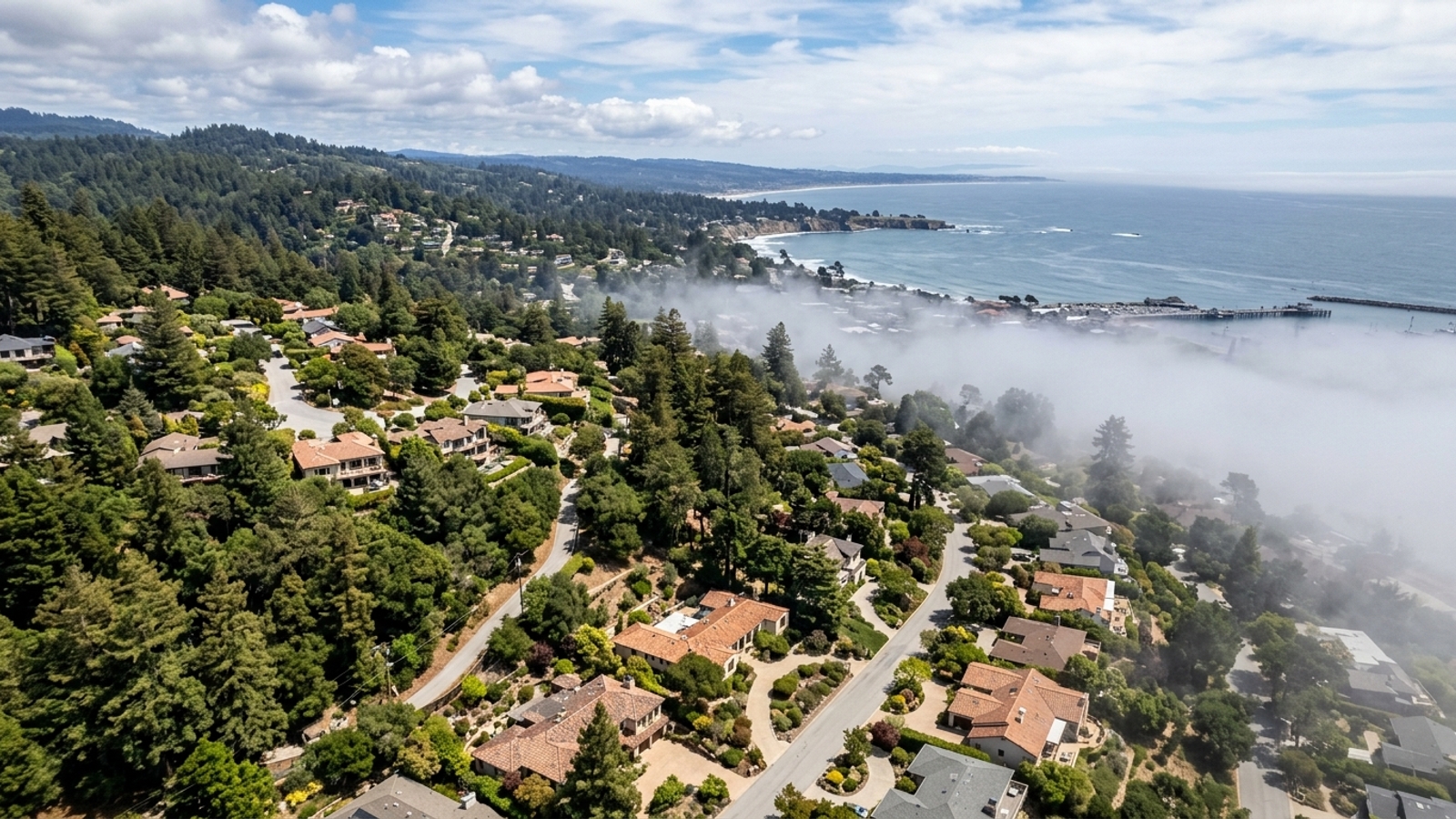
The Westside is its own world within Santa Cruz – occupying the coastal stretch west of the San Lorenzo River, anchored by Mission Street, and running straight into the Pacific. It is widely considered one of the best neighborhoods in Santa Cruz, CA. Mission Street does double duty as the neighborhood’s main commercial artery and its direct link to Highway 1, which tells you a lot about how the area is structured: surf culture, daily errands, and a highway on-ramp all within a few blocks of each other.
The broader Santa Cruz, CA real estate market is active in 2026, with a median sale price hovering around $1,462,500. Inventory remains tight – roughly 61 available homes citywide – and properties are going pending in about 15 days. If you’re targeting the Westside specifically, expect to pay a premium on top of those already-steep citywide numbers.
Property Values and Housing Styles
Westside home prices regularly run above both the city and county averages. The overall Santa Cruz median sale price sits just under $1.5 million, but median list prices on the Westside generally range from $1.5 million to $2.3 million – and how close a property sits to the water and coastal cliffs has a lot to do with where in that range it lands.
Historical data from late 2025 showed some Westside median sale prices dipping closer to $973,000, which reflects the mix of smaller attached properties and varying sale-to-list dynamics that can pull figures around. What you’ll mostly encounter today are established single-family homes, with a few newer developments near the commercial corridors. Citywide, homes are selling for about 1.3% over list price, so multiple-offer situations aren’t the exception here – they’re the baseline.
Renting vs Buying on the Westside
With only about 2.5 months of housing supply across Santa Cruz, you don’t have the luxury of taking your time. Renting first is a legitimate strategy – it lets you get a feel for the neighborhood before you’re locked into a purchase, and listings near Mission Street tend to put daily services within easy reach.
Getting Around the Neighborhood
Mission Street is the primary commercial route through the Westside and the main connection to Highway 1. Santa Cruz METRO bus routes serve the area, and Route 20 runs through the district with regular stops along major intersections – so getting around without a car is genuinely possible for a lot of daily trips.
The UCSC Westside Connector shuttle adds another layer, supplementing Route 20 with dedicated service to the Coastal Science Campus. It’s not a complete substitute for a car, but it’s more transit infrastructure than most coastal California neighborhoods this size can claim.
Parks and Coastal Landmarks
The Westside’s outdoor assets are concentrated along the coast. Natural Bridges State Park and Lighthouse Field State Park anchor the coastline, offering trails and direct beach access. If you need something further inland, Derby Park covers that recreation, while the Seymour Marine Discovery Center sits near the coastal bluffs.
Local Dining and Everyday Amenities
The Swift Street mixed-use development functions as a central gathering point – breweries, retail shops, the kind of place you end up on a Sunday afternoon without much of a plan. For daily groceries, New Leaf Community Market has a Westside location, and the Mission Street corridor handles most other everyday needs.
Restaurant options are genuinely varied. Cafe Brasil handles Brazilian cuisine, Sabieng Thai Cuisine covers that corner, and Vim sits at 2238 Mission Street. Aunt Nettie’s Bakery & Kitchen, Venus Spirits Cocktails and Kitchen, and Santa Cruz Mountain Brewing round out the food and drink options. For something quick near the water, The Picnic Basket and Steamer Lane Supply are the spots people tend to default to.
Public Schools Serving the Area
Westside Santa Cruz falls within the Santa Cruz City Schools district, which is made up of both the Santa Cruz City Elementary School District and the Santa Cruz City High School District. The district is headquartered at 133 Mission Street.
For younger students, the primary elementary campuses serving this neighborhood are Westlake Elementary School and Bay View Elementary School. That said, you’ll want to pull up the district’s boundary maps and confirm exactly which campus a specific property is zoned for before you assume anything.
A Note on Enrollment and Zoning
District boundaries don’t always follow the logic you’d expect. Two houses on the same block can sometimes land in different zones, so treat the boundary map as required reading, not optional research.
Coastal Weather Expectations
The Westside’s weather is classic Northern California coast – marine layer in the morning, sun in the afternoon, and a winter rainy season that brings the bulk of the year’s rainfall alongside cooler ocean breezes. Compared to inland areas, summer temperatures stay moderate, which is either the whole point or a minor inconvenience depending on how you feel about fog.
What’s easy to underestimate is how much microclimates vary even within the neighborhood itself. Properties closer to Lighthouse Field State Park get noticeably more direct wind and fog than homes situated further inland near Highway 1. That difference is worth experiencing firsthand before you commit – a few visits at different times of day will tell you more than any description can.
Frequently Asked Questions
What is the real estate difference between the Westside and Eastside of Santa Cruz, CA?
Specific Eastside data varies, but as a general rule, Westside properties carry a higher price tag. The Westside median list price often ranges from $1.5 million to $2.3 million, compared to the broader Santa Cruz median sale price of $1.46 million.
What is the difference between buying a home in the Upper Westside versus the Lower Westside of Santa Cruz?
Recent market data doesn’t break the Westside into distinct pricing tiers for Upper and Lower sections. Across the entire Westside district, buyers will find a competitive market where homes frequently list between $1.5 million and $2.3 million.
Why do homes on the Westside of Santa Cruz carry a higher price premium?
It comes down to location. The neighborhood offers immediate access to the Pacific Ocean, Natural Bridges State Park, and the Swift Street mixed-use development – and that proximity is priced in.
Which public school boundaries cover the Westside neighborhoods in Santa Cruz?
The area is served by the Santa Cruz City Schools district. Local elementary students typically attend Westlake Elementary School or Bay View Elementary School, though you should verify the specific zoning for any property you’re considering.
How fast do single-family homes typically go pending in the Westside Santa Cruz real estate market?
Across Santa Cruz, the median time on market before going pending is 15 days. With only 61 homes in active inventory citywide as of mid-2026, that pace isn’t slowing down – come prepared to move.

Leave a Reply