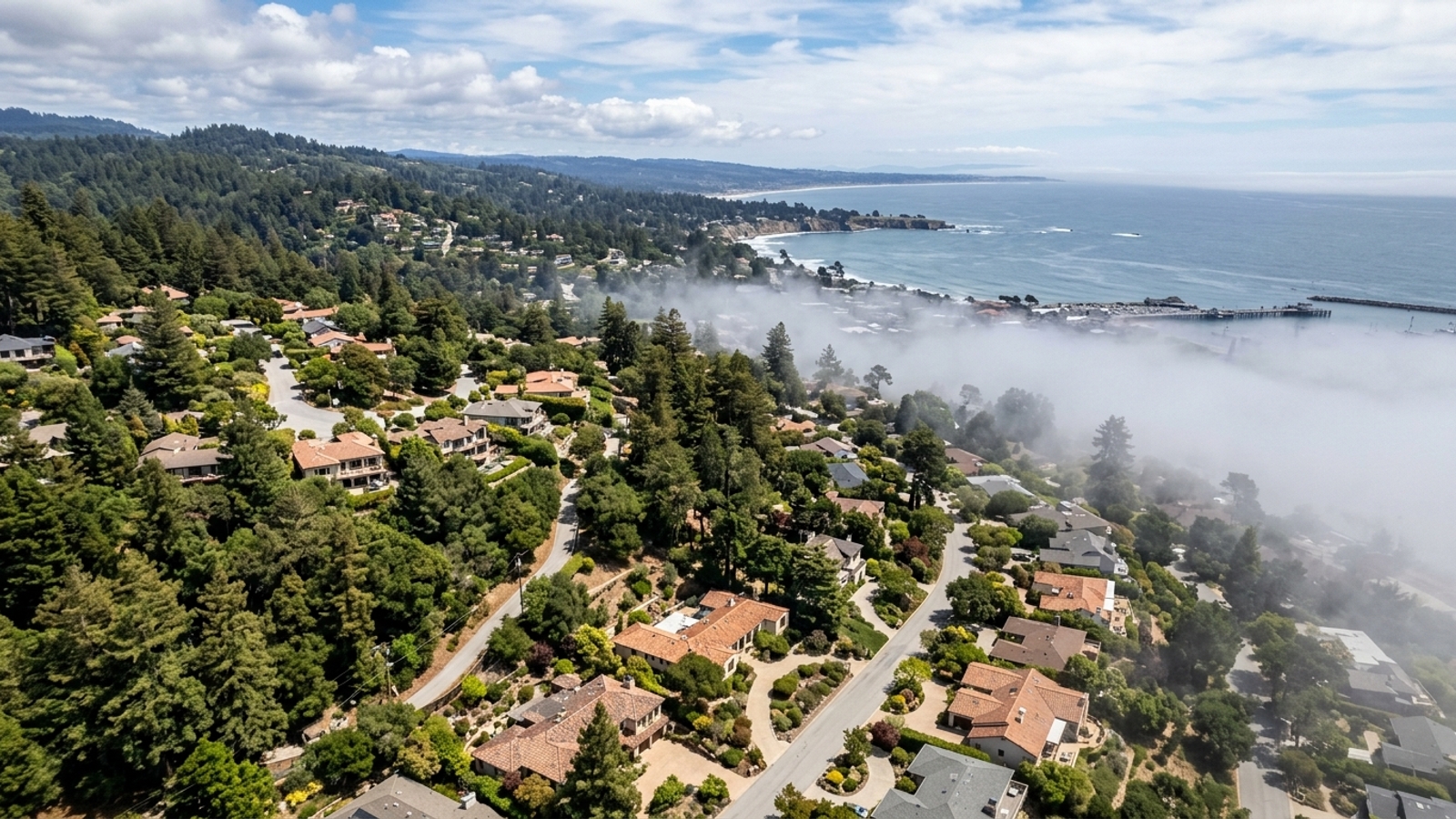
The climate in Santa Cruz, CA shapes daily life and real estate decisions along the Monterey Bay in ways that aren’t always obvious until you’re living in Santa Cruz. Buyers looking at properties need to understand how coastal geography creates distinct microclimates – foggy beachside neighborhoods on one end, warmer and sunnier spots up in the Santa Cruz Mountains on the other.
The local market moves fast. Homes spend roughly 15 days on the market before selling, and with a median sale price around $1.46 million, you can’t afford to make a purchase without factoring in the area’s specific weather patterns, rainy seasons, and natural hazards first.
The Santa Cruz Climate at a Glance
Santa Cruz, CA has a warm-summer Mediterranean climate. Under the Köppen-Geiger classification system, that’s a Csb zone – dry, relatively mild summers and wetter, cooler winters. The Pacific Ocean acts as a temperature regulator, keeping extreme heat and freezing temperatures away from most of the area for most of the year.
Understanding the Local Climate Zone
The ocean runs this show for the entire Monterey Bay region. Inland California can bake in triple-digit summer heat while the coast stays temperate. What buyers often underestimate is how quickly conditions change with elevation. The weather right on the water differs noticeably from conditions just a few miles inland or up in the mountains – and that gap has real implications for which property you choose.
Season by Season Weather Expectations
Summer brings the marine layer, a thick morning fog that rolls in off the Pacific and blankets the coast. It usually burns off by mid-day, leaving you with sunny, mild afternoons. Winter flips the script entirely – that’s the primary rainy season. Spring and fall sit in between, offering some of the clearest skies and most comfortable temperatures you’ll find all year.
Summer Coastal Fog and the Marine Layer
Inland heat pulls cool, moist Pacific air toward the coast during summer months, creating the thick morning fog locals call “June Gloom” – though it can linger well into July and August. If you’re looking at a property directly on the coast, expect that fog to stick around the longest each day. Neighborhoods a bit further inland or at higher elevations often sit above the marine layer entirely and see more morning sun.
Winter Rain and Shoulder Seasons
Winter is when Santa Cruz gets almost all of its annual precipitation. Storm systems roll in off the Pacific with steady rain and occasionally heavy winds along the coastline. It can be relentless for stretches.
September and October are the months I’d point most buyers toward if they want the best version of this place. Clear skies, warm days, no persistent morning fog – that’s the window before the winter rains arrive.
Monthly Temperature Averages
Average high temperatures stay mild year-round, ranging from about 57°F (14°C) in December up to roughly 73°F (23°C) from July through September. Most homes here don’t need air conditioning, and those moderate highs are exactly why. Overnight lows are similarly stable, ranging from about 45.5°F (7.5°C) in February to about 55°F (13°C) in September.
Hottest and Coldest Times of the Year
The warmest stretch runs July through September. Even then, coastal breezes prevent the kind of extreme heat waves that hit nearby Silicon Valley regularly. December, January, and February are the coldest months – nights get chilly, but temperatures rarely drop below freezing near the coast.
Rain, Snow, and Humidity Levels
Santa Cruz County‘s 30-year NOAA climate normals put annual rainfall at about 31.3 inches, with the vast majority of that falling between November and April. Snow in the city itself is essentially a non-event – NOAA climate normals report 0.0 inches annually for the area.
Coastal Versus Mountain Precipitation
The city’s 31.3 inches is just the baseline. The nearby Santa Cruz Mountains receive significantly more precipitation, as the higher elevations catch more moisture from incoming Pacific storms. It’s a meaningful difference if you’re considering a mountain property.
Humidity stays reasonably comfortable through most of the year. The summer marine layer brings high morning humidity, but as the fog dissipates in the afternoon, the air dries out considerably.
Natural Hazards and Severe Weather
Atmospheric rivers – long, narrow bands of heavy moisture – have become an expected part of California’s winter weather cycle. These systems can dump enormous amounts of rain in a short period, leading to localized coastal flooding and elevated river levels.
If you’re looking at properties near waterways or on steep hillsides, evaluate those risks before you make an offer. This isn’t a hypothetical concern; it’s a recurring reality.
Winter Storms and Wildfire Risks
The heavy rain from atmospheric rivers creates serious mudslide and debris flow risk, particularly in the mountain communities. That’s the winter hazard. Come summer and fall, when things dry out, the forested areas of Santa Cruz County face heightened wildfire danger before the rains return.
Both hazards are manageable with the right property and the right due diligence – but ignoring either one is a mistake.
Timing Your Move and Lifestyle Factors
Available inventory recently sat at just 61 homes, and properties frequently sell above list price. The honest answer is that you should be prepared to act regardless of the season – the market won’t wait for perfect weather.
That said, if you have flexibility, fall is the easier window for a move. Clear skies, manageable temperatures, no marine layer to slow you down. Trying to coordinate a move during a heavy winter atmospheric river complicates logistics and property inspections in ways you don’t want to deal with when you’re already under contract.
Comparing Regional Climates
Santa Cruz and Silicon Valley are separated by a mountain range and, in the summer, what feels like a completely different planet. Cities just over the hill run hot and dry; Santa Cruz stays cool because of the ocean. It’s not subtle.
Within the Monterey Bay area itself, Santa Cruz shares similar coastal fog patterns with neighboring communities. Its south-facing beaches, though, give it slightly different wind and swell exposures compared to the rest of the bay.
Frequently Asked Questions
What are the different microclimates in Santa Cruz, CA, and how should they influence my home search?
Santa Cruz has coastal zones with heavy summer marine layers and mountain areas with warmer summers and wetter winters. When you’re narrowing down a neighborhood, focus on elevation and distance from the beach – those two variables drive most of the difference. Properties higher up in the Santa Cruz Mountains sit above the fog but come with their own set of weather considerations.
Do I need special flood or wildfire insurance when buying a home in Santa Cruz County?
It depends entirely on the property’s location and elevation. Homes in the forested mountains often require specific wildfire coverage; properties near the coast or rivers may fall into flood zones. Verify the insurance requirements for any specific address during your due diligence – don’t assume.
What specific weather-related red flags should I look for during a Santa Cruz home inspection?
Start with water intrusion and drainage, since heavy winter rains create real exposure there. Roof condition deserves close attention given the roughly 31.3 inches of annual rainfall. And don’t overlook moisture damage from persistent coastal fog – it’s a common issue in beachside properties that can be easy to miss.
How do winter atmospheric rivers impact hillside properties and mudslide risks in the area?
Atmospheric rivers deliver intense, concentrated rainfall that saturates the ground fast. On steep terrain, that’s a significant mudslide and debris flow risk. If you’re looking at a hillside property, have the site’s drainage and soil stability evaluated – it’s not optional.
Which Santa Cruz neighborhoods get the most summer coastal fog during ‘June Gloom’?
The neighborhoods directly on the coastline see the thickest fog and the latest burn-off times. Move a few miles inland or gain some elevation, and the fog duration drops noticeably. It’s one of the more important variables to think through when deciding where you actually want to live.
What is the best time of year to list a house for sale in Santa Cruz to avoid the rainy season?
Spring and early fall give you the clearest weather for showings. September and October specifically offer warm, sunny days without heavy winter rain or thick morning fog. With homes currently averaging just 15 days on the market, a well-timed listing in that window moves quickly.





Leave a Reply