
It is the conversation I have almost every week with buyers. We are sitting down, looking at the pre-approval letter, and realizing that the dream of a renovated bungalow on the Westside of Santa Cruz doesn’t quite match the monthly payment reality.
For many buyers in 2026, the choice comes down to a difficult fork in the road. Do you accept less square footage to stay in Santa Cruz, or do you drive 20 minutes south to unlock a completely different tier of home ownership?
This isn’t just about picking a zip code. It is about weighing a lifestyle premium against a massive “Value Gap.” Right now, the price difference between these two markets is hovering around $500,000. That is a significant amount of equity.
Let’s look at whether the drive is worth the discount, and why Watsonville is shifting from a “Plan B” to a smart strategic play for savvy buyers.
The $500,000 Question: Is the Drive Worth the Discount?
Most people start their search wanting the classic Santa Cruz beach life. You picture walking to Steamer Lane or grabbing coffee on Pacific Avenue. But when you look at the inventory, the budget often dictates a small condo or a fixer-upper that needs a lot of cash to make livable.
This is where the “Value Gap” comes in. As of early 2026, the median price difference between a home in Santa Cruz and a home in Watsonville is roughly $500,000 to $600,000.
For a long time, Watsonville was viewed strictly as an agricultural outpost. That perception is outdated. Today, it is a rapidly modernizing market. We are seeing significant infrastructure investment and a wave of buyers who realized that trading a 17-mile drive for half a million dollars in savings is a financial move that makes sense.
By the Numbers: The 2025/2026 Price Tag Comparison
Let’s get straight to the data. Real estate runs on numbers, and the spread between these two cities is stark.
When we look at the current market data, here is what we are seeing on the ground:
- Median Sold Prices: Santa Cruz is currently sitting in the $1.3M – $1.4M range for single-family homes. Watsonville offers a much more approachable median of $800K – $850K.
- Price Per Square Foot: This is often the most telling metric. You are paying approximately 60% more for every square foot of dirt and structure in Santa Cruz compared to Watsonville.
- Inventory Levels: Santa Cruz inventory remains tight. It is a seller’s market where turnkey homes still see bidding wars. Watsonville is currently more “balanced,” meaning buyers have a bit more breathing room to negotiate and get offers accepted without waiving every contingency.
It is also worth noting the rental context. Rents in Santa Cruz have climbed so high that for many, a mortgage in Watsonville is actually comparable to their current rent check in town.
The $1 Million Challenge: What Your Budget Buys
To really understand the tradeoff, it helps to visualize exactly what your money gets you. Let’s take a hypothetical budget of $1,000,000. In our current market, this is a distinct “fork in the road” price point.
In Santa Cruz for $1 Million At this price point, you are looking at “entry-level” options. You might find a 2-bedroom condo or townhome. If you are lucky and patient, you might find a very small, older single-family home (likely under 1,000 sq ft) in a less central zone, or perhaps a mobile home situated near the water. You are paying for the zip code, not the granite countertops.
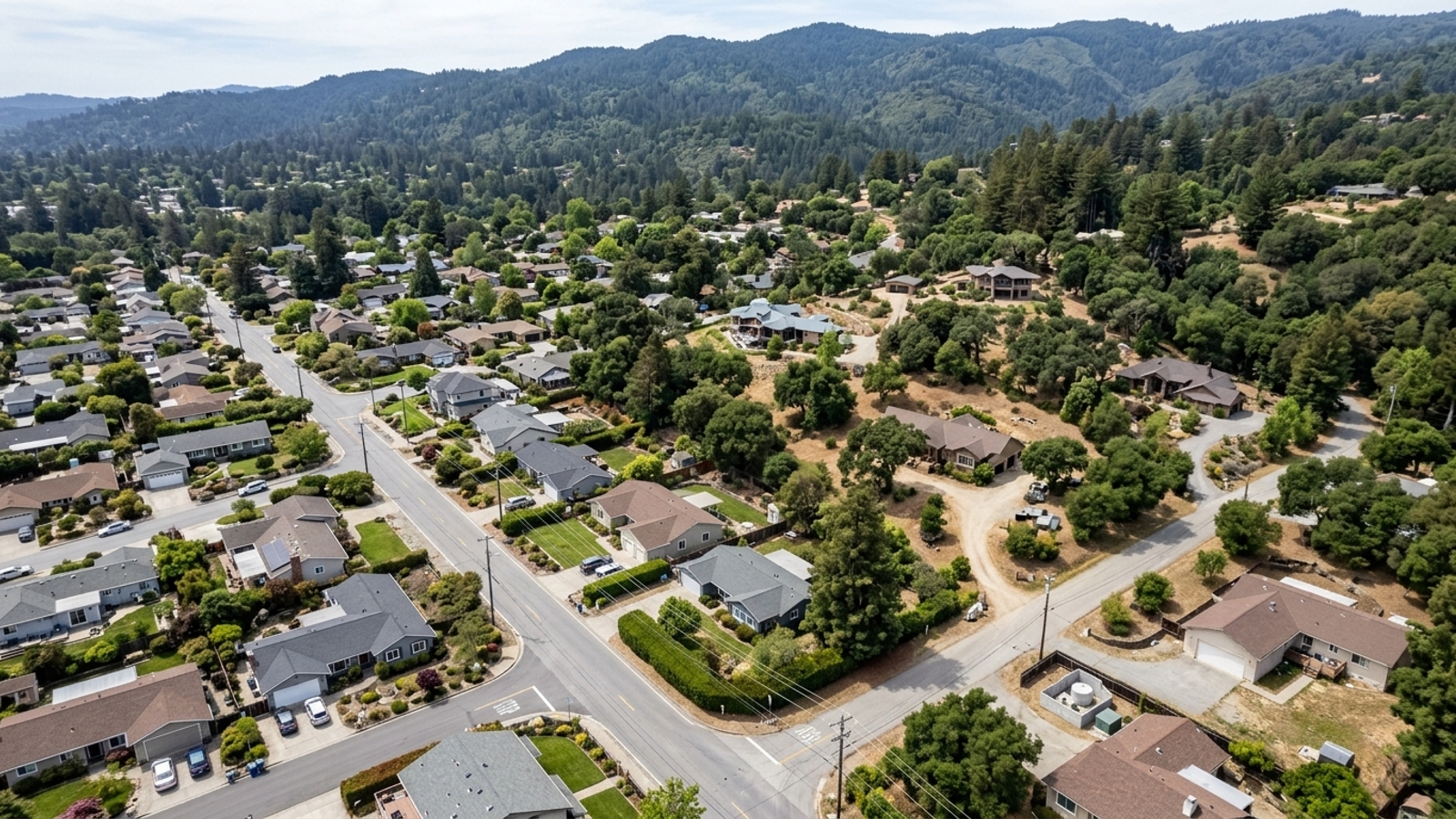
In Watsonville for $1 Million Here, that same budget puts you in the “mid-to-high tier” of the market. You are likely looking at a fully renovated 3 or 4-bedroom single-family home. It probably has a two-car garage, a backyard with room for a garden or play structure, and it might even be newer construction from the last 10-15 years.
The Tradeoff It comes down to this: In Santa Cruz, you are buying walkability and proximity to the coast, but sacrificing space and condition. In Watsonville, you are buying a turnkey lifestyle and comfort, but sacrificing the immediate “surf city” location.
Lifestyle & Commute: The Reality Check
We have to talk about the elephant in the room: Highway 1.
If you work in Santa Cruz or over the hill in Silicon Valley, the commute is the biggest objection to moving south. It is important to be honest about it. On a clear day or off-hours, the drive is an easy 20-30 minutes. However, during the “danger zone” of 3:30 PM to 6:30 PM, that 17-mile stretch can easily turn into 60 minutes of brake lights.
But there is also a “Vibe Shift” to consider.
- Atmosphere: Santa Cruz has a high-energy, tourist-heavy, surf-centric culture. Watsonville is quieter, grounded, and community-focused with a strong agricultural backbone.
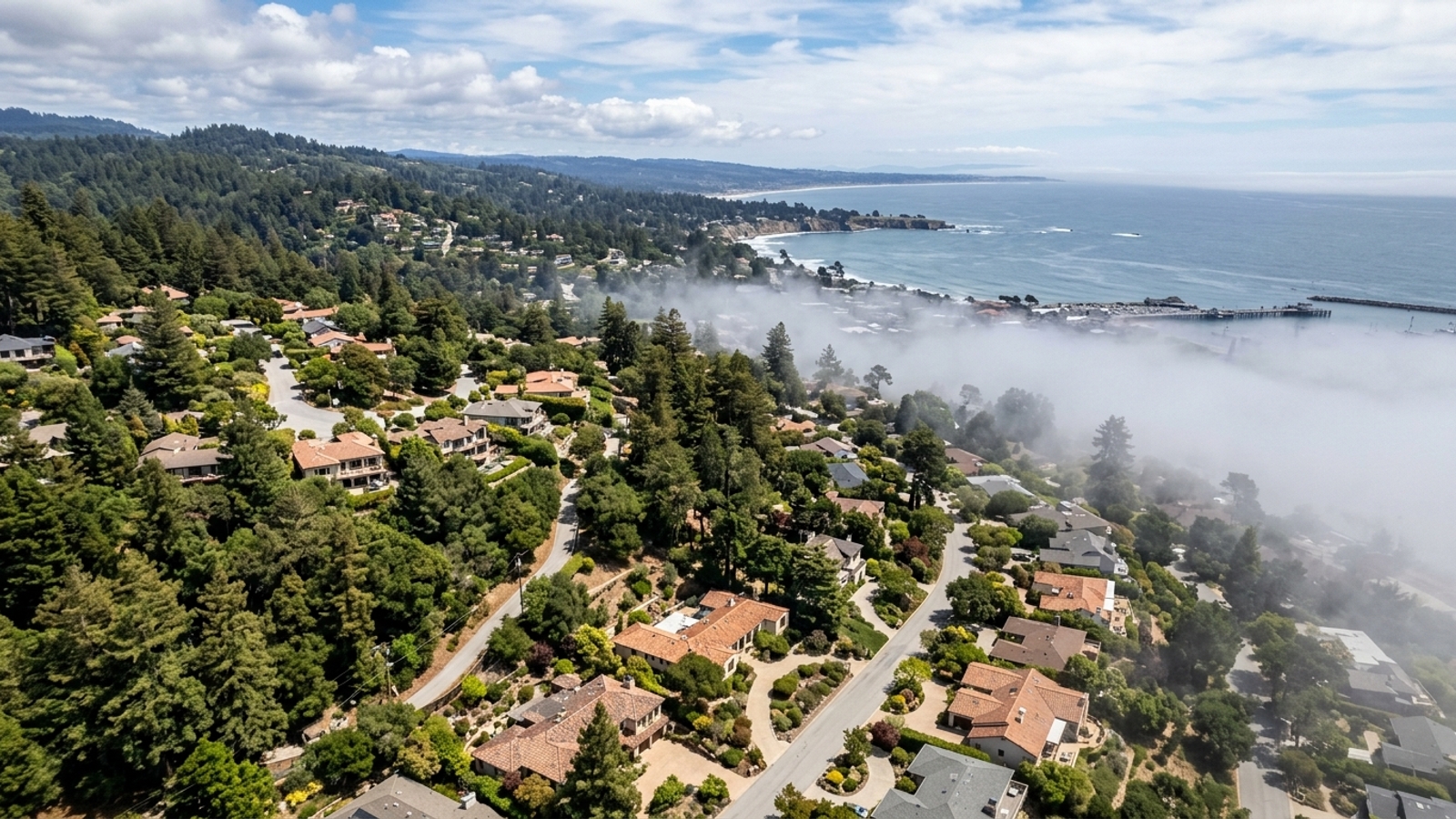
- Weather: This is a surprise for many newcomers. Watsonville is often significantly sunnier and warmer than Santa Cruz. When the fog (the “marine layer”) sits heavy on the Westside, it is often 75 degrees and sunny in Watsonville because it is slightly further inland.
- Amenities: Santa Cruz has the Boardwalk and a bustling downtown. Watsonville’s retail scene is growing, but it feels more local. You have everything you need – Target, Home Depot, grocery stores – but it lacks the high density of boutiques you find on Pacific Ave.
Future Outlook: Infrastructure & Appreciation
If you are looking at this from an investment perspective, you need to look at where the puck is going, not just where it is. Watsonville has several developments in the pipeline that suggest strong future value.
Downtown Watsonville Specific Plan Adopted recently, this plan is reshaping the city center. We are seeing real money move here, including a massive $39M grant for the transit center redevelopment. The vision includes more mixed-use housing and better walkability, which generally drives property values up over time.
Measure D & Infrastructure You will see “Measure D” signs or references often. For homeowners, this translates to funding for safe routes to schools, bike lanes, and much-needed repaving on major arteries like Green Valley Road and Freedom Blvd.
Appreciation Potential As Santa Cruz remains unaffordable for the average earner, “spillover” demand naturally flows south. This creates a floor for Watsonville prices. As long as Santa Cruz stays expensive, Watsonville represents the nearest relief valve, which helps keep equity growth stable. There is also the long-term vision of the Rail Trail, which aims to eventually connect the two cities via a bike and pedestrian path, further integrating the communities.
The Verdict: Who Fits Where?
So, which market is the right move for you? Here is how I usually break it down for clients.
Choose Santa Cruz if:
- You work locally or remote and absolutely hate driving.
- Lifestyle is your number one priority – you want to surf or walk to the beach daily.
- You are okay with a smaller footprint (condo or small cottage) and don’t need a large yard.
- You thrive on the energy of a busy, walkable town.
Choose Watsonville if:
- You want a turnkey home where you don’t have to do renovations immediately.
- You need space for a home office, a growing household, or pets.
- You are focused on building equity and want more “house” for your dollar.
- You work south of the county, work fully remote, or can tolerate the commute in exchange for a lower mortgage.
- You prefer warmer, sunnier weather over coastal fog.
Frequently Asked Questions
Is the commute from Watsonville to Santa Cruz really that bad?
It depends on your timing. If you are driving during peak rush hour (southbound in the afternoon between 3:30 PM and 6:30 PM), yes, it can take 45 to 60 minutes to go roughly 17 miles. However, if you have a flexible schedule and can drive before 3:00 PM or after 7:00 PM, it is a breezy 25-minute drive.
Will home prices in Watsonville decrease in 2026?
While the market is “softening” compared to the frenzy of previous years, a crash is unlikely. The severe lack of inventory in Santa Cruz constantly pushes buyers south, creating a steady stream of demand that keeps Watsonville prices balanced or slightly appreciating.
What is the Downtown Watsonville Specific Plan?
This is a strategic development plan adopted by the city to revitalize the downtown corridor. It focuses on increasing housing density, improving retail spaces, and upgrading transportation hubs (like the transit center), making the area more walkable and attractive for long-term investment.

Leave a Reply