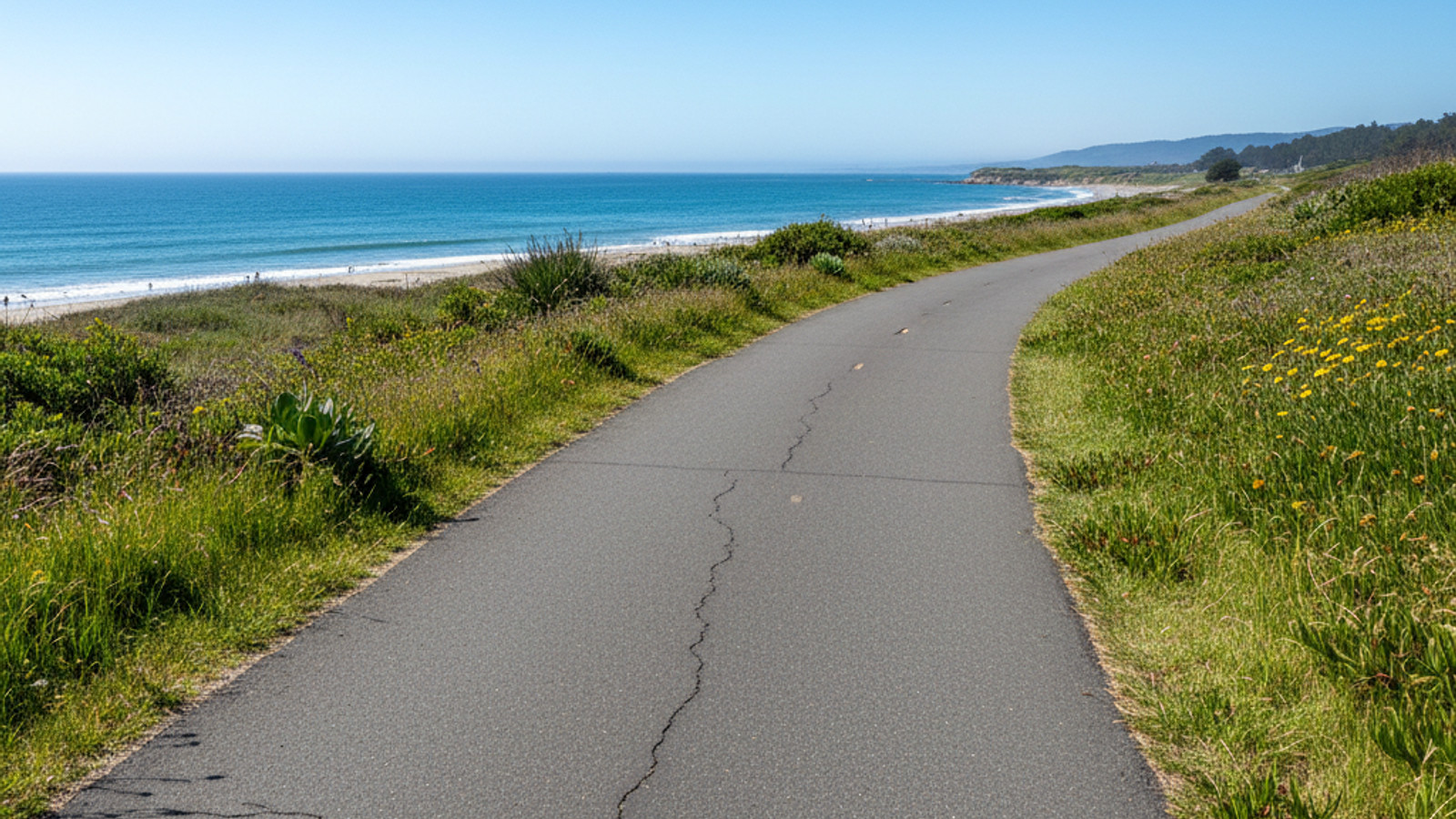
Santa Cruz is famous for its duality. On one hand, you have the laid-back surf culture, where it feels like nobody is in a rush to get anywhere. On the other hand, you have the reality of being a coastal city with limited entry points, meaning traffic is a very real topic of conversation here.
If you are looking at homes for sale in Santa Cruz, you need to know how the logistics work. The geography here is unique – squeezed between the Santa Cruz Mountains and the Monterey Bay – which dictates how we move. The good news is that we are seeing major shifts in local transit. With the “Reimagine Metro” initiative improving bus efficiency and a massive surge in electric biking infrastructure, living “car-light” is becoming a genuine option for many residents.
Let’s break down exactly how locals get around, from conquering the hill to finding a parking spot downtown.
The Silicon Valley Commute: Conquering Highway 17
If you are planning on living in Santa Cruz but working in Silicon Valley, Highway 17 is going to be a big part of your life. It is the primary artery connecting the coast to the tech hubs, and it is as beautiful as it is challenging.
The road itself is a winding, four-lane mountain highway. It requires focus. During rush hour, traffic can bottleneck, especially if there is weather or an accident. However, thousands of people make this drive daily because the lifestyle trade-off is worth it. You start your day in the redwoods and end it by the ocean.
The Solution: The Highway 17 Express
You don’t actually have to drive it yourself. The Santa Cruz Metro operates the Highway 17 Express (often just called the “Route 17”). This is a commuter favorite because it allows you to reclaim that travel time to read, sleep, or work on your laptop.
The bus connects Downtown Santa Cruz directly to the San Jose Diridon Station. Once you get to Diridon, you have access to the rest of the Bay Area via Caltrain (which can take you up the peninsula to San Francisco), VTA light rail, or Amtrak.
Recent updates through the Reimagine Metro project have streamlined this service. To speed things up, there are now more direct trips that skip certain stops in Scotts Valley, getting you to the train station faster.
- Cost: The fare is approximately $7 one-way, or you can grab a day pass for about $14.
- Connectivity: At Diridon, you are steps away from connections to San Jose International Airport (SJC) and Levi’s Stadium.
For those weighing the pros and cons of the commute, it is worth comparing the lifestyle of living in Santa Cruz vs. San Jose.
Public Transportation: Navigating the Santa Cruz Metro
If you are staying local, the Santa Cruz Metropolitan Transit District (METRO) is your main option. While many residents own cars, the bus system is robust, particularly if you are navigating the core of the city or heading to the university.
The UCSC Connection
The bus system here is heavily designed around the University of California, Santa Cruz. Since the campus is located on a steep hill overlooking the city, getting students up and down is a massive logistical operation.
If you are looking at neighborhoods on the Westside, you will see the distinctive blue buses everywhere. The key routes to know are the 18, 19, and 20, which weave through the Westside neighborhoods before heading up to campus. Route 16 is another workhorse, running up Laurel Street.
Tech and Fares
Gone are the days of fumbling for exact change. To ride like a local, download the “Transit” app or use Google Maps for real-time tracking – this is essential because buses can get delayed during peak traffic. For payment, the Splash Pass app lets you buy tickets on your phone.
- Students: UCSC students ride for free with a valid student ID.
- Standard Fare: For everyone else, a standard local ride is approximately $2.
This network makes areas near the bus lines some of the best neighborhoods for UCSC students and staff who want to avoid campus parking fees.
A Cyclist’s Paradise: Biking & The Rail Trail
Santa Cruz has always had a strong bike culture, but the last few years have been transformative. Between the rise of e-bikes and infrastructure projects, cycling is often the fastest way to get around town during peak summer months.
Bike Share with BCycle
You will notice white electric bikes docked all over town. This is the BCycle program (which replaced previous operators like Jump). It is a convenient way to get from downtown to the beach without worrying about locking up a personal bike. You can pick up a bike at a dock in Downtown, ride it to the Wharf or the University, and dock it there.
The Rail Trail Project
The most exciting development for cyclists and pedestrians is the Coastal Rail Trail. The vision is a 32-mile multi-use path running the length of the county. It is important to know that this is a “work in progress.”
Currently, Segment 7 (which runs through the busy parts of the City of Santa Cruz) is largely complete and usable. It’s a game-changer for getting across town safely away from cars. For the mid-county sections, there has been a recent push for an “interim trail” approach—building a trail directly on the train tracks temporarily—to connect the neighborhoods faster rather than waiting years for the ultimate configuration.
Of course, for pure recreation, nothing beats cruising West Cliff Drive for the ocean views. It’s one of the premier outdoor activities in Santa Cruz.
Driving & Parking: What to Expect
While we love our bikes and buses, most households here still rely on cars for groceries and errands. Here is what you need to know about being behind the wheel.
Summer Traffic Patterns
If you live here, you learn to time your drives. On summer weekends, traffic swells significantly. The “Fishhook”—the merging interchange where Highway 1 and Highway 17 meet—is a notorious slow spot. Traffic generally peaks on Friday afternoons (tourists arriving) and Sunday afternoons (tourists leaving).
Downtown Parking
Parking in Downtown Santa Cruz is actually quite managed. There is a system of numbered lots and parking garages (structures) that are usually your best bet for longer stays.
- Rates: You are looking at approximately $1.25 – $2.00 per hour depending on the lot.
- Apps: Most meters and lots use the ParkMobile app. It is highly recommended to have this installed so you can top up your meter remotely.
- Permits: Be careful parking in residential neighborhoods, especially near the Beach Flats or the circles near UCSC. Many of these streets are permit-only zones for residents to prevent overflow parking.
Airport Logistics: SJC vs. SFO
When it is time to travel, locals have strong opinions about which airport to use.
- San Jose International (SJC): This is the winner for most Santa Cruz residents. It is roughly 45 minutes away without traffic. It is smaller, easier to navigate, and accessible via the Highway 17 Express bus combined with a short Uber or VTA connector.
- San Francisco International (SFO): This is a major international hub, but getting there is a haul. It is about 1.5 hours away, often more with traffic. To get there by transit, you have to take the Highway 17 Express, transfer to Caltrain, and then transfer to BART or a connector. Most locals only choose SFO for direct international flights or significantly cheaper fares.
- Monterey (MRY): While geographically close, flight options are limited and usually more expensive. It is mostly used for connecting flights.
Frequently Asked Questions
Do you need a car to live in Santa Cruz?
It depends on your lifestyle and location. If you live in Downtown or on the Westside and work locally or study at UCSC, you can comfortably live car-light or car-free. However, if you live in the San Lorenzo Valley or mid-county, a car is generally necessary for daily errands.
Does BART go to Santa Cruz?
No, BART does not come to Santa Cruz. The BART system ends in the San Jose area (Milpitas/Berryessa). The closest rail connection to Santa Cruz is the Caltrain station at San Jose Diridon, which connects to the Highway 17 Express bus.
How much is the bus from Santa Cruz to San Jose?
The Highway 17 Express fare is approximately $7.00 for a one-way trip. It is an affordable alternative to driving, especially when you factor in gas and parking costs in Silicon Valley.
Is Santa Cruz bike-friendly?
Yes, extremely. Between the dedicated bike lanes, the developing Rail Trail, and the BCycle electric bike-share program, the city is very accessible on two wheels. Many locals prefer biking over driving for short trips to avoid parking hassles.

Leave a Reply