If you’re looking at homes on the Central Coast, you’ve likely hit the classic dilemma: should you live right in the mix of Santa Cruz, or head just six miles up the hill to Scotts Valley? It’s a debate I hear constantly from buyers. On paper, these two cities are neighbors, separated by a short drive on Highway 17. But in reality, the lifestyle gap is massive.
Choosing between them isn’t just about picking a house; it’s about picking your daily rhythm. Santa Cruz brings the iconic surf culture, the walkability, and that distinct energy that comes with living in a world-famous beach town. It’s vibrant, eclectic, and sometimes a little chaotic. Scotts Valley, on the other hand, offers a polished, manicured suburban feel. It’s the quiet gateway to the mountains, offering easier access to Silicon Valley without the frantic pace of the coast.
As of early 2026, the decision often comes down to what you’re willing to trade off. Do you trade ocean views for a shorter commute? Do you trade walkability for a larger lot and warmer weather? Let’s break down exactly how these two unique markets compare so you can figure out where you belong.
Lifestyle & Vibe: Eclectic Coast vs. Suburban Calm
The moment you drive from one city to the other, the energy shifts. Santa Cruz is undeniably a “destination.” It’s bohemian, busy, and filled with distinct neighborhoods that each have their own personality. Whether you are grabbing coffee on the Westside, checking out the surf at Pleasure Point, or strolling downtown, there is always something happening. In the summer, the town swells with tourists, bringing a lively buzz that locals either love or learn to navigate around.
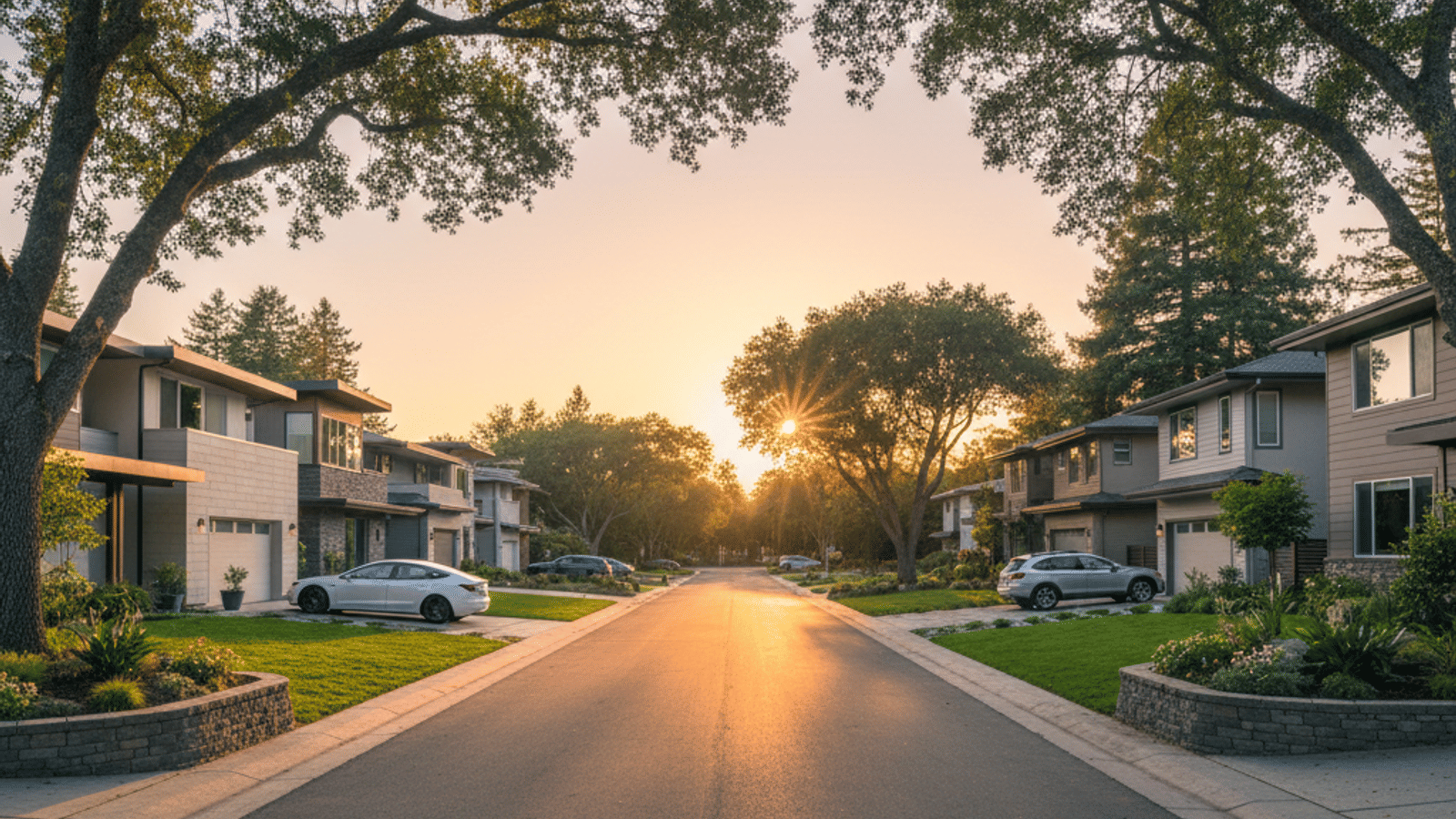
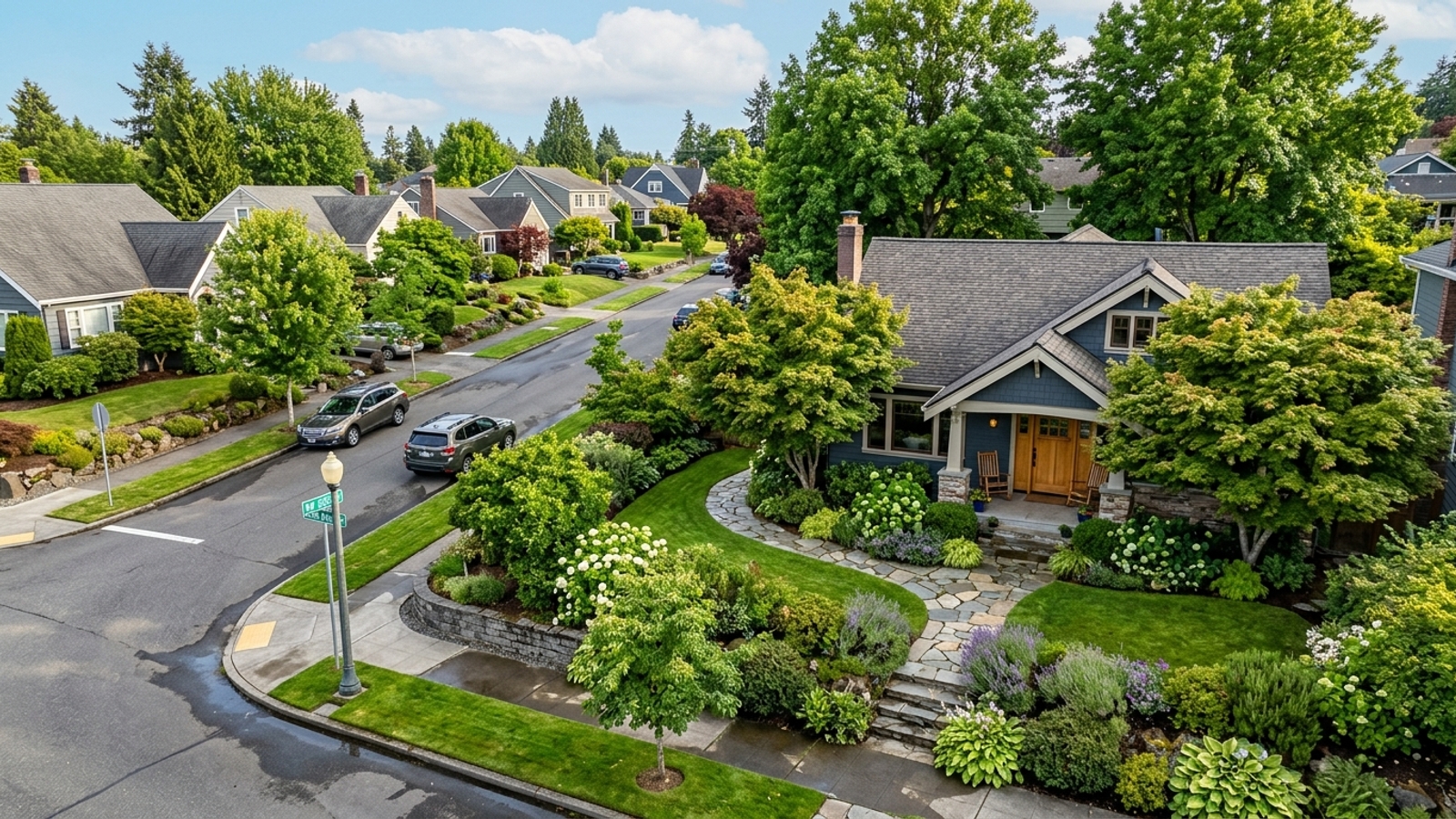
Scotts Valley feels entirely different. It is often viewed as a sanctuary from the chaos—a place where the evenings are quiet and the streets are predictable. The vibe here is organized and community-focused. You won’t find the grit or the late-night noise of the coast; instead, you get a town centered around weekly farmers markets, sports fields, and immediate access to hiking trails.
For many buyers, this is the biggest emotional hurdle. If you thrive on cultural vibrancy and don’t mind sharing your town with visitors, moving to Santa Cruz is the dream. But if you want to come home to silence and a sense of order after a long work week, Scotts Valley is likely more your speed.
Cost of Living & Housing Market Comparison
Let’s talk numbers, because this is usually where the rubber meets the road. Historically, Santa Cruz has commanded a premium simply because you are paying for the Pacific Ocean at your doorstep. As of early 2026, median home prices in Santa Cruz generally hover between $1.4 million and $1.7 million, though this varies heavily. A bungalow within walking distance of West Cliff Drive will cost significantly more than a similar sized home in a neighborhood further inland.
Scotts Valley often looks like the “value” play at first glance, with median home prices sitting closer to the $1.1 million to $1.3 million range. You typically get a newer build and a bit more square footage for your money. However, the gap is narrowing, and there are hidden costs in the mountains that you need to budget for.
The biggest financial surprise for new Scotts Valley buyers is often insurance. Because much of the area is designated as a Wildland-Urban Interface (WUI) zone, securing fire insurance can be more difficult and significantly more expensive than in downtown Santa Cruz. When you are calculating your cost of living in Santa Cruz versus Scotts Valley, you have to look beyond the mortgage.
Here is how the costs tend to shake out:
- Housing Prices: Santa Cruz has the higher ceiling, especially for ocean-view properties.
- Insurance: Scotts Valley residents often pay higher premiums due to fire risk tiers.
- Rentals: The Santa Cruz rental market is consistently tighter and pricier, driven largely by student demand from UCSC.
- Utilities: Water is expensive across the county, but your heating and cooling bills will differ based on the microclimate—AC is a “nice to have” in Santa Cruz but a “must have” in Scotts Valley.
The Fog Line Factor: Weather Differences
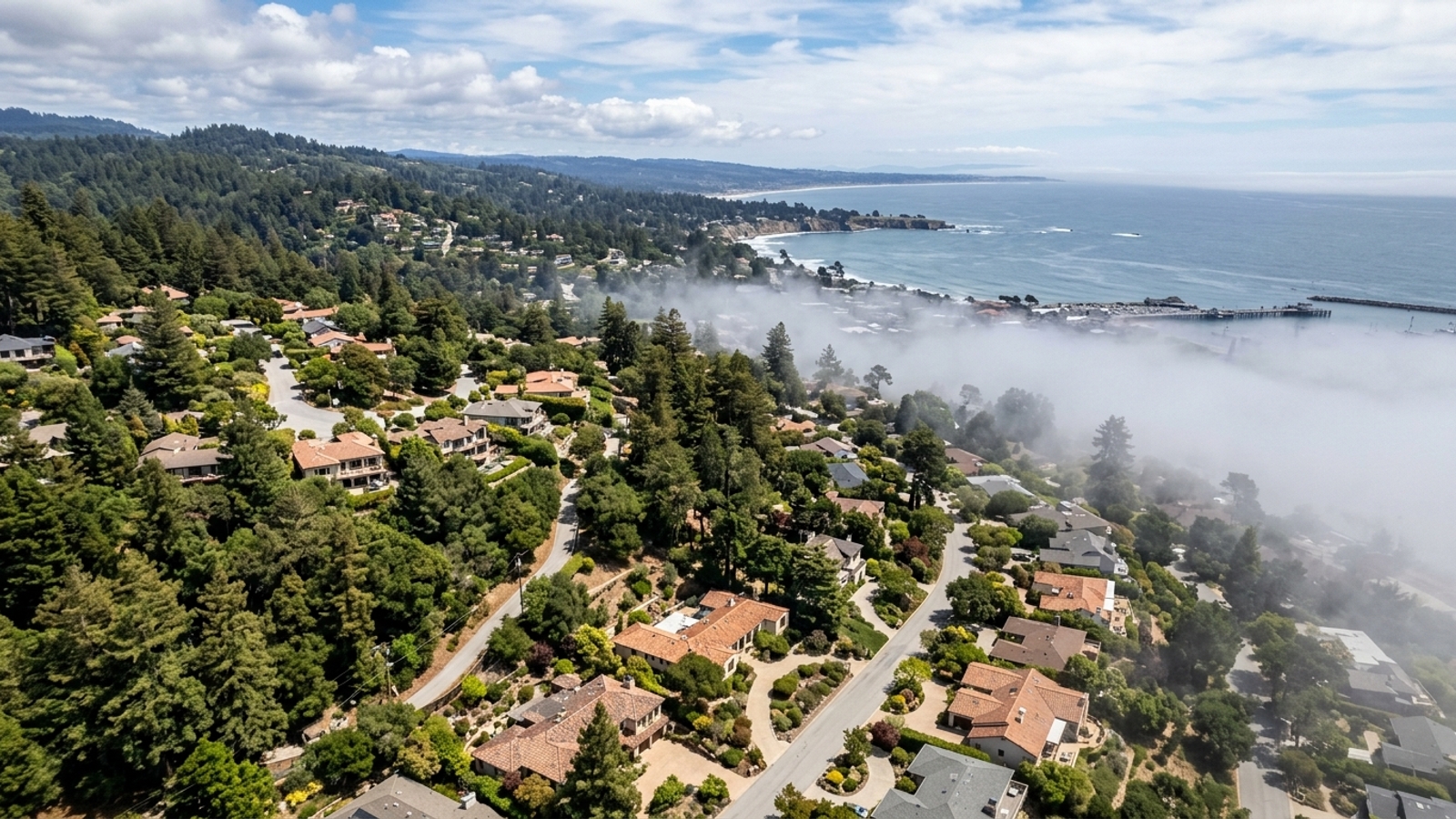
Locals call it “The Fog Line,” and it is a very real boundary. The Santa Cruz Mountains act as a barrier, trapping the marine layer along the coast while keeping the inland valleys sunny. This creates a dramatic microclimate shift that happens right along Highway 17.
Santa Cruz is defined by this marine influence. In the summer, you might wake up to grey skies that burn off by noon, keeping the temperatures mild and comfortable—usually in the 70s. It’s natural air conditioning. However, if you crave heat and consistent sunshine, the “May Grey” and “June Gloom” on the coast might wear you down.
Scotts Valley is famously “above the fog.” It is not uncommon for it to be 65 degrees and misty in Santa Cruz, while just ten minutes away in Scotts Valley, it is 85 degrees and sunny. Summer highs here regularly hit the mid-to-high 80s. You get roughly 20 to 30 more sunny days per year up in the hills. The trade-off is that winter rainfall is slightly higher due to the elevation and the Santa Cruz Mountains effect, but for sun-seekers, the valley climate is often the winner.
Commuting to Silicon Valley: The Highway 17 Equation
If you are commuting to San Jose, Los Gatos, or anywhere in Silicon Valley, Scotts Valley has a distinct strategic advantage. It physically cuts about six miles off the drive, but the time saved is often much more than that because you avoid the “Fishhook.”
The Fishhook is the local name for the merge where Highway 1 meets Highway 17 in Santa Cruz. During rush hour, this bottleneck can easily add 15 to 25 minutes to your drive before you even really get on the highway. Scotts Valley residents skip this entirely. They hop on Highway 17 north of the congestion and are often over the summit and into Los Gatos in 20 to 25 minutes.
For a Santa Cruz commuter, you have to factor in that extra leg. A typical rush-hour commute to San Jose might take a Scotts Valley resident 35 minutes, whereas a Santa Cruz resident is looking at 50 to 60+ minutes.
- Public Transit: The Highway 17 Express bus serves both cities, but Scotts Valley features a large, convenient Park & Ride transit center that is very popular with tech commuters.
- Alternate Routes: When Highway 17 shuts down (which happens due to accidents or storms), Scotts Valley residents have slightly easier access to backroads like Zayante or Glenwood Drive to navigate around the mess.
Schools & Education Districts
When considering long-term value and community, the school districts are a major factor.
Santa Cruz City Schools is a larger district serving a diverse population. It includes varied elementary options and large high schools like Santa Cruz High, Harbor High, and Soquel High. The district is known for having a wide range of AP programs and arts electives, reflecting the broader cultural mix of the city. It also benefits from proximity to the University of California, Santa Cruz (UCSC), which often partners with local schools for enrichment programs.
The Scotts Valley Unified School District is much smaller and is a huge draw for residents moving to the area. It is widely recognized for high test scores and incredibly strong community funding. Parents in Scotts Valley are heavily involved, and the district often feels like a tight-knit community hub. While Santa Cruz offers variety and breadth, Scotts Valley offers a focused, cohesive educational environment that many buyers specifically seek out.
Both areas also have easy access to Cabrillo College for dual-enrollment opportunities or continuing education.
Safety & Crime Perceptions
Safety is always a priority, and the two cities have different profiles here. Generally speaking, Scotts Valley is statistically safer, particularly regarding property crime. Because it is a suburban enclave tucked away from the main tourist corridors, issues like theft and vandalism are lower. It feels quiet, and residents often report a strong sense of security.
Santa Cruz, being a major tourist hub and a denser urban environment, deals with higher rates of property crime. This is common in any beach town that attracts millions of visitors a year. You have to be more vigilant about locking bikes and cars in Santa Cruz than you might be in a cul-de-sac in Scotts Valley.
However, it is important to note the neighborhood variance. Santa Cruz has plenty of pockets—like the Upper Westside or Carbonera—that are incredibly quiet and safe, rivaling the feel of the suburbs. It’s not a black-and-white comparison, but if you look at the averages, Scotts Valley tends to have the edge on low crime stats.
Outdoor Recreation: Waves vs. Redwoods
This is the fun part of the decision. What do you want to do on your Saturday morning?
If you choose Santa Cruz, your playground is the Pacific Ocean. You have world-class surfing at Steamer Lane, sailing out of the harbor, beach volleyball at Main Beach, and miles of scenic walking along West Cliff Drive. It is an active, water-centric lifestyle where you can often leave your car at home and walk to the recreation.
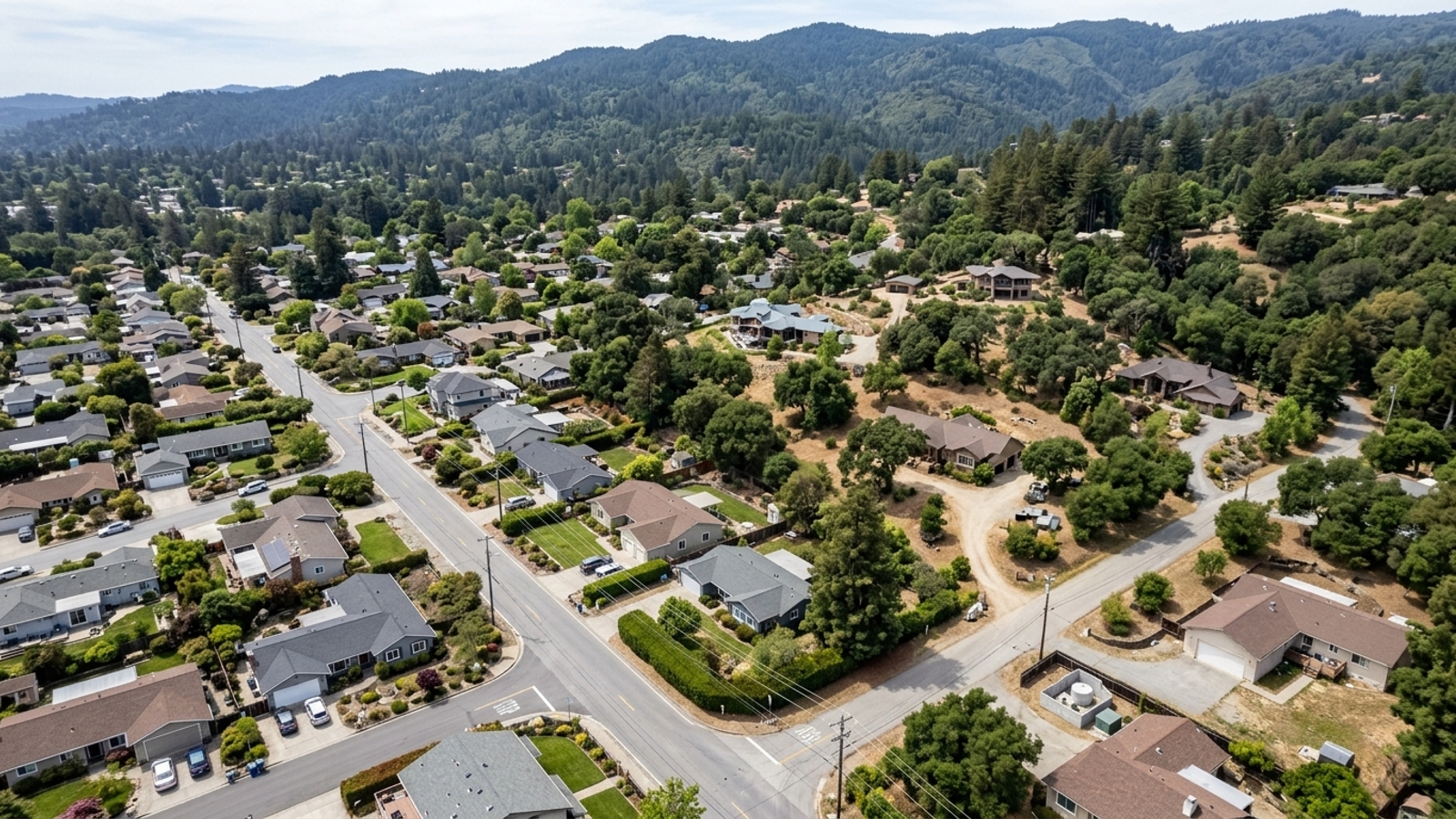
Scotts Valley trades the waves for the woods. It is the gateway to some of the best hiking and mountain biking in the state. You have immediate access to Henry Cowell Redwoods State Park and the Glenwood Open Space Preserve. The mountain biking culture here is huge, with trails that attract riders from all over. While you can’t walk to the beach (it’s about a 15-minute drive), you can often walk or bike directly from your garage onto a trail.
Which City is Right for You?
Ultimately, there is no “better” city, just the one that fits your life right now.
You should choose Santa Cruz if:
- You crave walkability and want to be in the heart of the action.
- You love the ocean and want to surf or walk on the beach daily.
- You prefer a cooler climate and don’t mind the marine layer.
- You are okay with a longer commute in exchange for the coastal lifestyle.
You should choose Scotts Valley if:
- You prioritize a shorter, less stressful commute to Silicon Valley.
- You want warmer, sunnier weather and “real” summer heat.
- You are looking for larger lots and a quieter, predictable suburban atmosphere.
- You want to avoid the tourist traffic and the “Fishhook” bottleneck.
If you are still on the fence, I highly recommend spending a day in each. Grab lunch on Pacific Avenue in Santa Cruz, then drive up for a hike in Scotts Valley. You’ll feel the difference immediately.
Frequently Asked Questions
Is Scotts Valley warmer than Santa Cruz?
Yes, significantly. Scotts Valley is usually “above the fog,” meaning it enjoys sunny skies while Santa Cruz is socked in by the marine layer. In the summer, Scotts Valley can easily be 10 to 15 degrees warmer than the coast.
Is the commute from Santa Cruz to San Jose difficult?
It can be challenging, especially during rush hour. Santa Cruz commuters have to navigate the “Fishhook” merge of Highway 1 and 17, which adds significant time. Expect a commute of 45 to 60+ minutes from Santa Cruz, compared to 25 to 35 minutes from Scotts Valley.
Are homes cheaper in Scotts Valley than Santa Cruz?
Generally, the purchase price for a home in Scotts Valley is lower than a comparable home in a prime Santa Cruz neighborhood. However, the gap is narrowing, and you must factor in potentially higher fire insurance costs in Scotts Valley’s Wildland-Urban Interface zones.
How far is Scotts Valley from the beach?
It is very close—typically just a 10 to 15-minute drive down Highway 17 to get to the ocean. You get the benefit of mountain living while still being able to pop down to the beach for a sunset walk or a surf session easily.

Leave a Reply