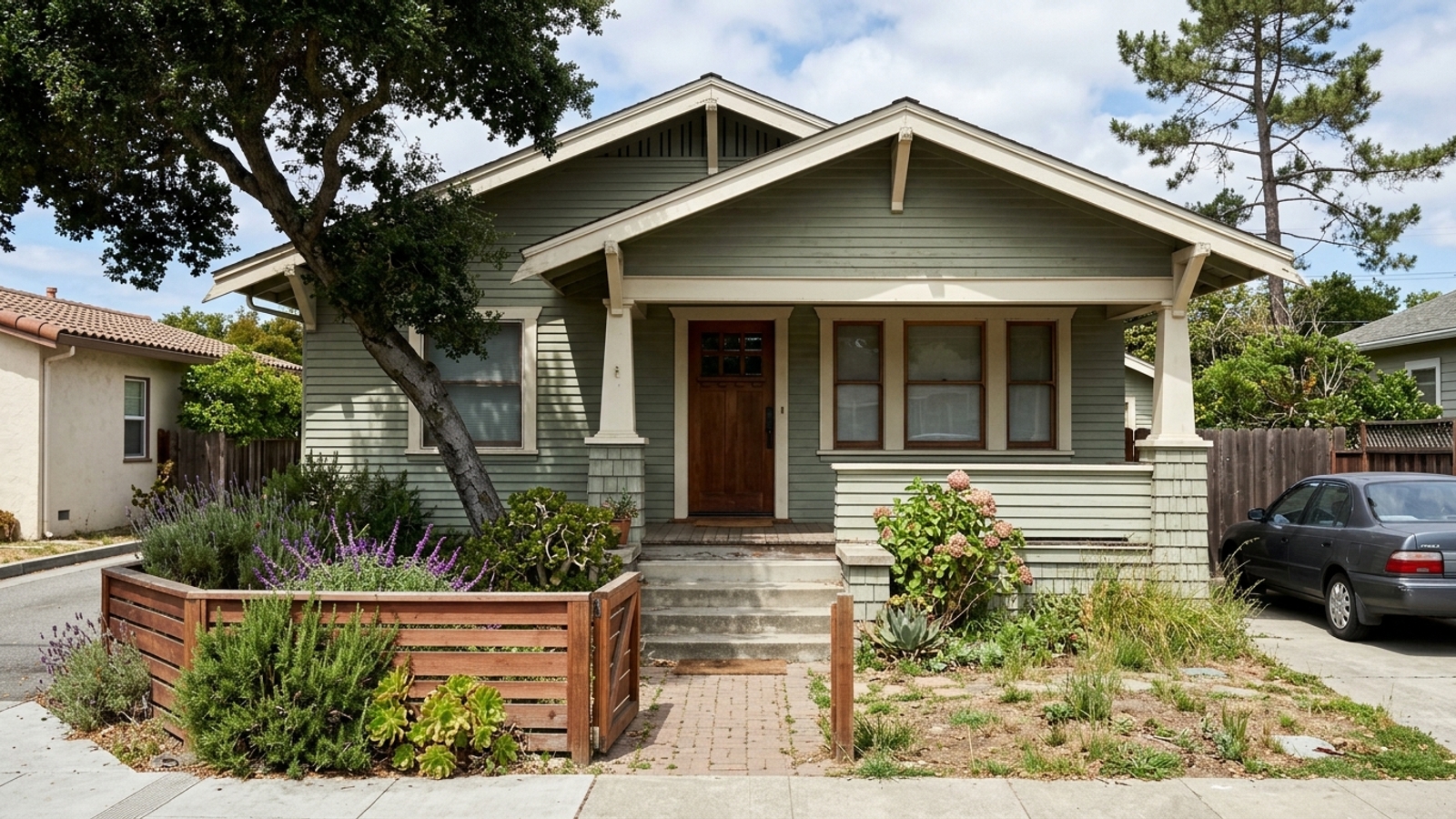
Santa Cruz sits on the northern edge of Monterey Bay along California’s Central Coast – a specific geography that puts it squarely between Silicon Valley’s tech campuses and open coastline stretching south toward Monterey. That position is exactly why buyers end up in these Santa Cruz, CA zip codes: they want coastal living without completely abandoning access to major employment centers.
The market reflects that demand. The median sale price is currently around $1,351,000, and homes are spending roughly 14 days on the market before selling. If you’re considering a move here, understanding the actual boundaries and commute routes matters – they’ll shape which neighborhood makes sense for your daily life more than almost anything else.
The Exact Location of Santa Cruz
Santa Cruz is the official county seat of Santa Cruz County. Rather than butting up against other cities, it’s bordered mostly by unincorporated communities and small towns.
To the north and northeast, the nearest incorporated neighbor is Scotts Valley, six miles north of downtown in the Santa Cruz Mountains. Further north along Highway 9 you’ll find Ben Lomond and Felton.
Eastern and Western Boundaries
To the east, the city limits give way to the unincorporated community of Live Oak. The Santa Cruz Harbor straddles this boundary – the west side sits in the Seabright neighborhood, the east side in Live Oak. Keep going southeast along the coast and you hit Capitola, Soquel, and Aptos.
To the south and west, the city fronts directly on the Pacific Ocean and Monterey Bay. West Side Santa Cruz runs from Ocean Street to Western Drive, forming the westernmost edge of the city. Past Western Drive: Natural Bridges State Park and the small coastal community of Davenport.
Commuting Routes and Highway Infrastructure
Highway 1 and Highway 17 are the two arteries that connect Santa Cruz to the rest of the region. Highway 1 runs along the coast; Highway 17 cuts through the mountains toward San Jose and the broader Silicon Valley area. For public transit, residents rely on the Santa Cruz METRO system – and if you’re commuting over the mountains to San Jose, the Highway 17 Express bus is the direct option.
Drive Times to Silicon Valley
Santa Cruz to San Jose via Highway 17 is about 32 miles. Under normal conditions, that’s roughly 38 to 45 minutes.
Rush hour is a different story. Weekday morning traffic runs 7:00 a.m. to 9:00 a.m.; evenings run 4:00 p.m. to 7:00 p.m. Because much of Highway 17 is only two lanes in each direction, drive times routinely stretch to 1.5 to 2 hours. That’s not a worst-case scenario – that’s a typical Tuesday.
Distances to Airports and State Parks
The closest major flight hub is San Jose Mineta International Airport (SJC), approximately 33 miles from Santa Cruz. Without traffic, you’re looking at about 40 to 42 minutes. If you travel frequently for work, build Highway 17 rush hour into your departure math – the same congestion that slows the daily commute will slow your airport run.
Access to Natural Attractions
Henry Cowell Redwoods State Park sits about six miles north of downtown near Felton, reached by taking Highway 9 or Graham Hill Road into the Santa Cruz Mountains. The park includes a 40-acre old-growth redwood grove. On the other end of the city, Natural Bridges State Park sits directly on the western edge of the city limits – ocean access doesn’t get much more immediate than that.
How Geography Shapes the Local Housing Market
Where you look in Santa Cruz determines what you’re buying, almost more than your budget does. The market itself is active – 93 homes sold in a single month in recent data, with over 35% of listings selling above asking price. But the property type contrast between the coast and the mountains is sharp.
Inside the incorporated city, urban residential zoning is built around smaller lots. The RB Ocean Beach Residential District requires a minimum of 4,000 square feet per dwelling unit. At the other end of the density spectrum, Higher-density Residential Flex zoning allows up to 45 dwelling units per acre – roughly 968 square feet per unit.
Lot Sizes in the Mountains
The unincorporated Santa Cruz Mountains operate under Rural Residential Land Use Designations, and the lot sizes reflect that. Suburban Residential zones require one to five acres per dwelling unit.
Push further out and the minimums climb. Rural Residential zones require 2.5 to 20 acres. Mountain Residential zones mandate 10 to 40 acres per dwelling unit. You’re not talking about slightly bigger yards – you’re talking about a fundamentally different kind of property on a forested parcel a long way from a walkable street.
Frequently Asked Questions
What county is Santa Cruz located in?
Santa Cruz is located in Santa Cruz County and serves as the official county seat.
How far is Santa Cruz from San Jose?
About 32 miles via Highway 17. Without traffic, the drive runs roughly 38 to 45 minutes.
What is the closest airport to Santa Cruz?
San Jose Mineta International Airport (SJC), approximately 33 miles away.
How long does the commute from Santa Cruz to Silicon Valley take during rush hour?
During morning and evening rush hours, the drive over Highway 17 routinely takes 1.5 to 2 hours. The two-lane highway backs up hard during those windows.
How does proximity to Highway 17 impact home prices in Santa Cruz?
Buyers who prioritize a shorter commute to San Jose tend to focus on homes near Highway 17, which keeps demand strong in those corridors. The overall median sale price in the area is currently around $1,351,000.
Is Santa Cruz, CA considered part of the San Francisco Bay Area?
No. Santa Cruz is officially on the Central Coast of California – on the northern edge of Monterey Bay, just south of the Bay Area boundaries.

Leave a Reply