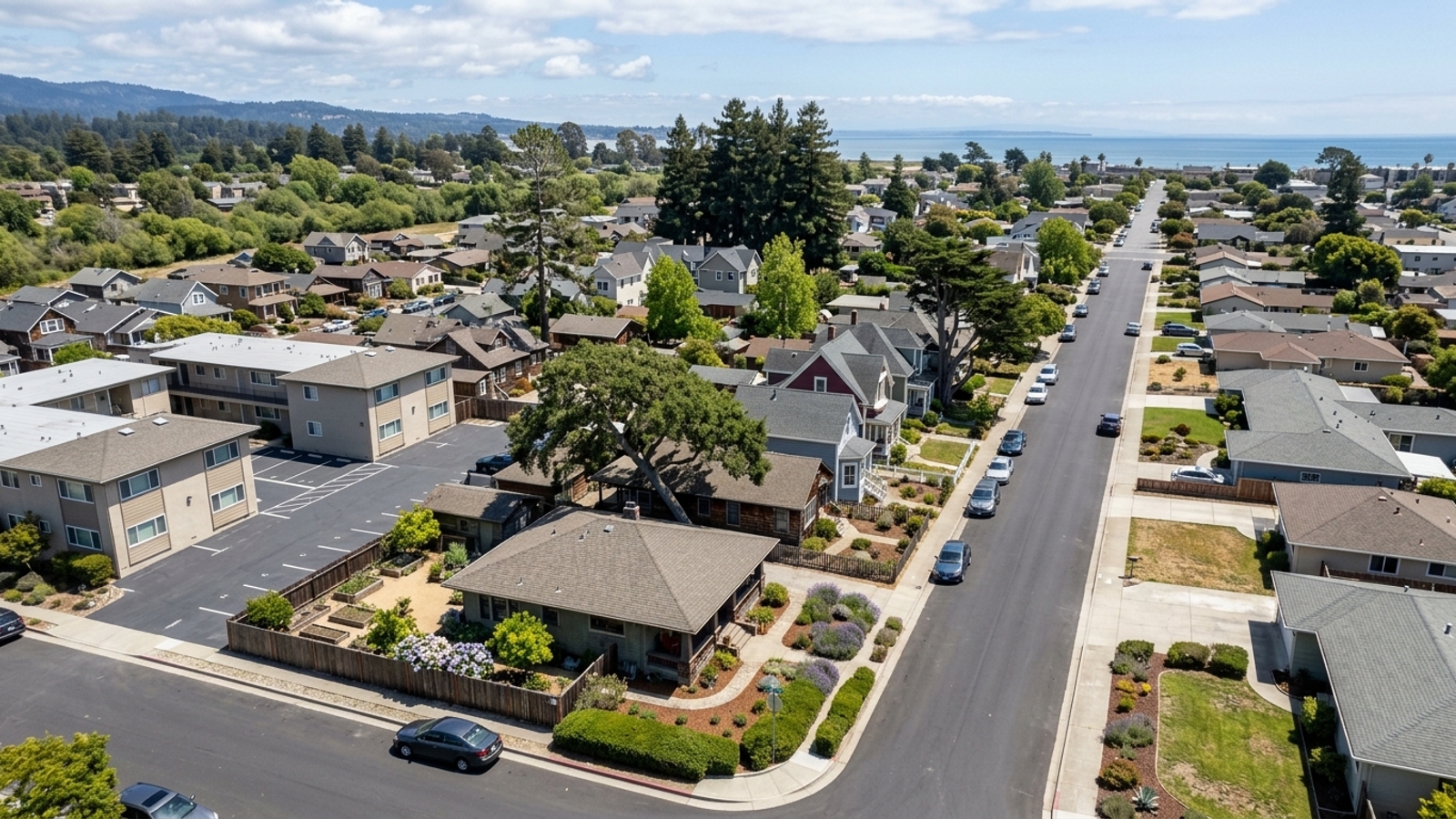
The median home price across Santa Cruz, CA zip codes recently hit roughly $1.35 million, with available properties spending just about 14 days on the market. Those numbers don’t exist in a vacuum – they’re a direct result of the relationship between the city’s housing supply and the people who live here.
State-wide migration patterns get most of the press, but the local numbers tell a more specific story. If you’re buying or selling in Santa Cruz, understanding exactly how many people call this city home – and what that means for housing demand – will help you set realistic expectations before you make a move.
Santa Cruz Population Size and Recent Trends
The most recent U.S. Census Bureau data from the 2024 American Community Survey puts the Santa Cruz population at 61,607 residents, spread across roughly 21,713 households. The median age is 31.1 years, which reflects the mix you’d expect here: long-term homeowners, renters, and a meaningful number of university-affiliated residents.
What those figures don’t immediately show is the direction of travel. Buyers entering this market today are doing so as the resident count has ticked down slightly – yet housing competition has stayed fierce. That disconnect is worth understanding.
Current Census Numbers
The 61,607 figure tells you something important about Santa Cruz’s scale. This is a mid-sized coastal city, and it operates like one – with real urban infrastructure but very little room to grow outward.
The Pacific Ocean on one side and protected mountain terrain on the other create a hard boundary around where people can live. That geographic constraint means even a flat or slightly declining population count keeps consistent pressure on the existing housing supply. There’s nowhere to spill over.
Tracking the Slight Decline
Between 2023 and 2024, Santa Cruz County lost about 1,300 residents – a 0.49% annual decrease driven primarily by out-migration to other states. Zoom out a little further and city-level data shows a 4.5% population decrease from 2019 to 2024.
Here’s the thing, though: that dip has not produced a corresponding drop in property values. Limited inventory continues to absorb whatever active buyer demand exists, and prices have held firm.
How Resident Counts Influence the Housing Market
With roughly 63 active listings in the city recently, Santa Cruz is sitting at just 2.1 months of supply. That’s a tight market by any measure, and it keeps conditions tilted firmly toward sellers.
When homes do come on, they tend to go fast and go high. The average sale-to-list ratio recently came in at 101.5%, which tells you the buyer pool is large enough to sustain multiple-offer situations. The 93 properties sold recently confirm this isn’t a market where well-priced listings linger.
Inventory and Buyer Demand
Inventory here moves in fits and starts. In April 2026, available homes in Santa Cruz County jumped from 349 to 407 – a 16% increase – after a period in the second half of 2025 where listings had been steadily falling before edging back up. Before that, the county hit a six-year inventory high in May 2025.
If you’re a buyer, watch those active listing counts. Even a modest uptick in available homes can open a brief window where you’re not fighting off a dozen competing offers. Those windows close quickly.
New Construction Projects in the Pipeline
Several significant developments are actively working to add housing for Santa Cruz’s current population. The Downtown Plan Expansion – approved by the California Coastal Commission – allows building heights up to 85 feet and creates the potential for 1,600 new housing units in the corridor connecting downtown to the beach.
Other projects are targeting specific affordability tiers. The River Row apartments bring 175 units to the San Lorenzo Riverwalk. Pacific Station North adds 128 affordable units. The Harvey West Studios project broke ground in January 2025 to deliver 120 permanent supportive housing homes, making it the largest development of its kind in the county.
Housing Types Across Local Density Levels
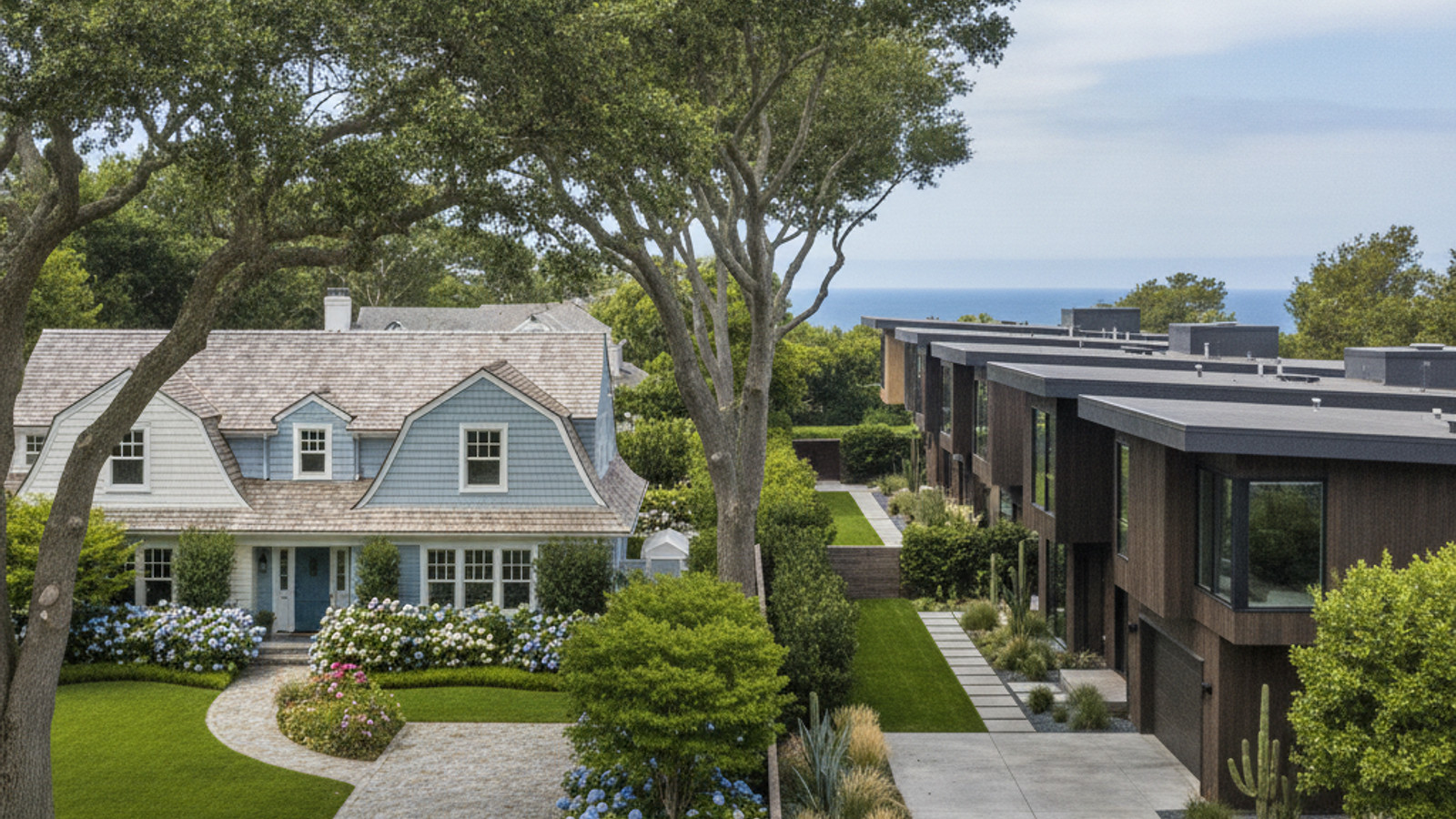
The city’s 61,607 residents don’t all live in the same kind of neighborhood, and that matters depending on what you’re shopping for. Santa Cruz’s population density shapes the physical layout of the city – it largely determines where you’ll find condominiums versus detached homes with actual yards.
Think about how you want to live day to day before you start touring. That answer should drive which part of the city you focus on.
High-Density Downtown and Coastal Corridors
Near the city center and along the main transit corridors, you’re looking at condominiums, townhomes, and multi-family properties. That’s just the nature of high-density zones.
The pipeline here continues to grow denser. The River Street and Center Street projects are adding 279 below-market-rate units through 2028, and a combined library, parking garage, and housing project on Cedar Street is putting over 100 very-low-income units into the downtown grid.
Single-Family Neighborhoods
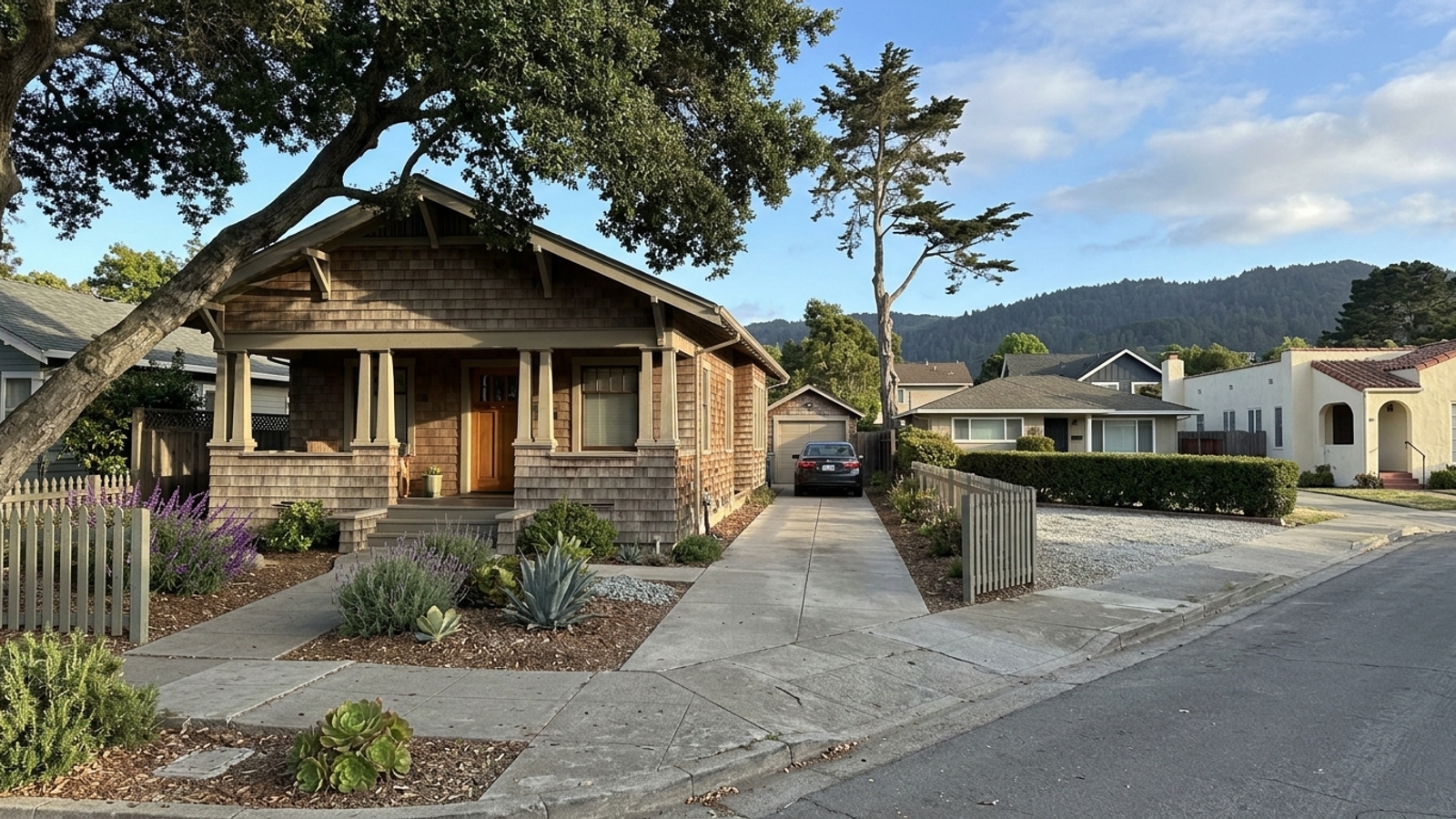
Move away from the downtown and beach corridors and the density drops, the lots get bigger, and the housing stock shifts to detached single-family homes. You’ll pay a premium for them, and you’ll have less inventory to choose from.
Don’t expect extra time to decide. With the median days on market around 14 days, single-family homes in these lower-density pockets require quick decisions and clean financing. Hesitation tends to cost you the house.
Frequently Asked Questions
Is the population of Santa Cruz growing?
No – it’s slightly contracting. Santa Cruz County lost about 1,300 residents between 2023 and 2024, and at the city level, the population dropped 4.5% from 2019 to 2024.
How does population size affect the Santa Cruz housing market?
The constrained geographic footprint means that even with a slight population dip, buyer demand continues to outpace the available housing supply. That dynamic keeps the median sale price at roughly $1.35 million and holds inventory to just 2.1 months.
What is the population density of Santa Cruz?
The city fits 61,607 residents into a restricted coastal footprint. That produces high-density zones near downtown and the beach, while areas further inland spread out into lower-density, single-family neighborhoods.
How does the UCSC student population impact housing availability for buyers in Santa Cruz?
The student presence contributes directly to the city’s median age of 31.1 years. That demographic makes up a meaningful share of the 21,713 local households and sustains consistent housing demand even as the broader county population has edged down.
Which Santa Cruz neighborhoods offer lower population density and larger lot sizes?
Neighborhoods located away from the downtown center and the immediate coastal corridors. Those areas move away from apartments and condominiums and toward detached single-family homes with more space between you and your neighbors.
Will recent California population shifts negatively impact my Santa Cruz property value?
The out-migration hasn’t hurt values here. Despite the city’s 4.5% population decrease from 2019 to 2024, the median sale price holds at roughly $1.35 million, and homes are still selling slightly above their list price.

Leave a Reply